

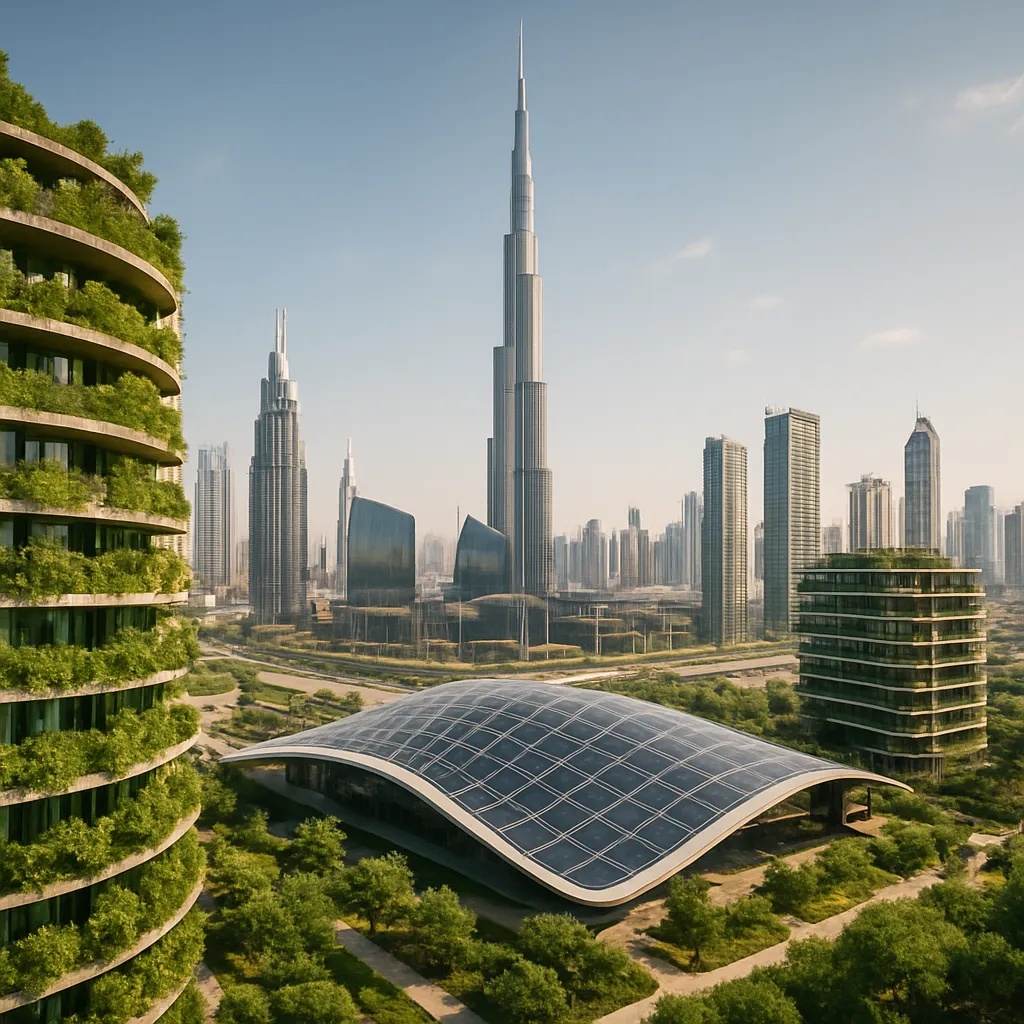
Dubai has long been synonymous with spectacle, record‑breaking towers and bold engineering, yet a quieter revolution is unfolding behind the skyline. A new generation of planners, engineers and developers is asking how the city can grow without exhausting its resources, and how glass-and-steel landmarks can evolve into climate‑aware habitats. This shift is visible in energy‑positive buildings, desert‑adapted masterplans and regulations that reward low‑carbon design. Many projects draw inspiration from vernacular Gulf architecture while deploying cutting‑edge technology in façades, water systems and materials. To understand this transformation, it helps to explore how modern Dubai architecture is being reimagined through the lens of sustainability, resilience and human wellbeing, turning a once‑resource‑intensive urban model into a testing ground for greener futures.
From Iconic Skyline to Sustainable City
Dubai’s rapid rise was powered by ambitious infrastructure and a drive to attract global business and tourism. Early development cycles focused on scale and speed, often prioritising iconic silhouettes over environmental performance. Air‑conditioned glass towers, artificially cooled public spaces and car‑centric layouts became defining features of the urban fabric.
Over the last decade, however, climate pressures, energy prices and global expectations have pushed the city toward a more balanced model. Authorities began to link urban expansion with resource efficiency, setting targets to cut carbon emissions, improve air quality and increase the share of renewable energy. Developers discovered that sustainable buildings could reduce operational costs, differentiate projects in a crowded market and appeal to environmentally conscious residents, companies and investors.
This evolution does not mean abandoning bold design. Instead, it reframes ambition: the new race is not just for the tallest or most luxurious tower, but for the most efficient, adaptable and low‑impact urban projects. The result is a growing portfolio of experimental districts, green retrofits and performance‑driven high‑rises that embed sustainability into the core business model of construction and real estate.
Policy Framework Driving Green Architecture
Dubai’s transformation is anchored in an expanding regulatory framework that nudges every new building toward higher performance. Building codes now integrate thermal performance standards, efficient mechanical systems and requirements for better insulation and airtightness. Municipal approvals often demand detailed energy modelling, daylight analysis and water‑saving strategies.
Green building rating systems, inspired by global benchmarks but adapted to local conditions, provide structured pathways for sustainability. They encourage developers to pursue high‑performance envelopes, advanced HVAC controls, indoor air quality management and responsible material sourcing. Public projects are commonly required to meet specific certification levels, signalling that sustainability is not a luxury feature but a baseline expectation.
In parallel, long‑term city strategies aim to increase the share of renewables in the energy mix and cut per‑capita resource consumption. These macro‑targets filter down to architectural practice, justifying investments in on‑site solar, demand‑response technologies and energy‑efficient district cooling. The policy environment thus acts as both carrot and stick, rewarding innovation while gradually raising minimum standards.
Designing for a Harsh Desert Climate
True sustainability in Dubai begins with responding intelligently to the desert climate. High temperatures, intense solar radiation, humidity spikes and dust storms challenge both comfort and durability. Contemporary sustainable architecture reinterprets climatic strategies long used in regional vernacular buildings, then amplifies them with modern engineering.
Passive design is the foundation. Architects now pay greater attention to orientation, shading, massing and natural ventilation potential. Narrow floorplates can maximise cross‑ventilation and daylight while reducing reliance on artificial lighting. Deep overhangs, recessed windows and perforated metal screens reduce unwanted solar gain but preserve outward views.
Thermal performance of the envelope is carefully engineered. High‑performance glazing with low solar heat‑gain coefficients, well‑insulated walls and airtight construction lower cooling loads. Cool roofs with reflective finishes diminish heat absorption, while ventilated façades create buffer zones against outdoor heat.
Landscape design also plays a climatic role. Drought‑tolerant planting, shaded courtyards, water features and evaporative cooling strategies help moderate microclimates around buildings. This not only supports outdoor comfort but reduces the temperature differential between exterior and interior, easing HVAC demands.
Energy Efficiency and Renewable Integration
Energy consumption in Dubai is dominated by cooling, lighting and appliances. Sustainable architecture addresses all three through an integrated approach. High‑efficiency chillers, variable‑speed drives, smart controls and well‑zoned HVAC systems deliver the same comfort with significantly less electricity. Demand‑controlled ventilation adapts fresh‑air supply to actual occupancy, improving indoor air quality while avoiding unnecessary conditioning of empty spaces.
Lighting strategies harness both natural daylight and efficient artificial systems. Façade design balances transparency and shading to bring in diffuse daylight while limiting glare and heat. Interior layouts place workspaces near windows, reducing dependence on electric lighting. LED fixtures with occupancy and daylight sensors automatically dim or switch off when natural light levels are adequate or rooms are unoccupied.
Rooftops and façades increasingly host photovoltaic arrays, turning buildings into small power plants. Net‑metering arrangements and declining solar costs make on‑site generation financially attractive for larger developments. Some mixed‑use complexes integrate solar canopies over parking areas, providing both shade and renewable energy. When linked to energy storage and advanced building management systems, these installations contribute to peak‑load reduction and grid stability.
Water Conservation and Reuse
In a water‑scarce region, efficient use and reuse of water are central to sustainable design. Dubai’s green buildings employ low‑flow fixtures, dual‑flush toilets and smart meters that provide real‑time consumption data. Leak detection systems and sub‑metering encourage users and facility managers to identify waste quickly.
On the landscape side, architects specify native or adapted plant species that can thrive with minimal irrigation. Drip systems, soil‑moisture sensors and weather‑responsive controls drastically reduce outdoor water use compared with conventional sprinklers. Hardscape layouts concentrate vegetation where it has the greatest microclimatic impact, avoiding unnecessary turf areas.
Greywater and condensate recovery are gaining traction. Water from showers, sinks and air‑conditioning condensate can be filtered and reused for irrigation or toilet flushing, significantly reducing demand on potable supplies. Large commercial projects may also incorporate on‑site treatment plants, turning wastewater into a resource instead of a burden on municipal infrastructure.
Materials, Waste and the Carbon Footprint
Attention is shifting from operational energy to the embodied carbon of buildings. Concrete and steel, the dominant materials of the skyline, carry heavy environmental footprints. Sustainable practitioners in Dubai experiment with supplementary cementitious materials, high‑recycled‑content steel and locally sourced aggregates to lower impact.
Life‑cycle assessment tools help compare structural options and finishes, enabling design teams to prioritise lower‑carbon alternatives. Durable, modular components extend building lifespans and simplify future renovations, reducing demolition waste. Prefabrication and off‑site manufacturing improve quality control, minimise construction waste and reduce on‑site disturbance.
Construction waste management plans are now standard on leading projects. Segregation, on‑site sorting and partnerships with recycling facilities keep metals, concrete, wood and plastics out of landfills. Documented diversion rates not only satisfy regulatory or certification requirements but provide data that can refine future project strategies.
Human‑Centric and Biophilic Design
Sustainable architecture in Dubai increasingly recognises that environmental performance must be matched by human wellbeing. Buildings are designed to support physical health, mental comfort and social interaction, which in turn boosts occupancy satisfaction and long‑term asset value.
Indoor environmental quality is a major focus. Efficient ventilation, low‑VOC materials and well‑designed filtration systems ensure clean indoor air despite dust and outdoor pollution. Acoustic planning reduces noise from mechanical equipment and neighbouring traffic, valuable in dense urban corridors.
Biophilic design introduces natural elements into everyday spaces. Green walls, indoor planting, rooftop gardens and views toward thoughtfully landscaped courtyards provide visual and psychological relief from dense development. Access to daylight is maximised, with glare control and careful programming to avoid overheating. Shared amenities such as shaded terraces, community gardens and pedestrian promenades encourage walking, social connections and healthier lifestyles.
Resilient Planning at the District Scale
The shift toward sustainability is not limited to individual buildings. Dubai is experimenting with entire districts planned around resource efficiency, walkability and transit connectivity. Mixed‑use zoning reduces the need for long car trips, allowing residents to live, work and socialise within a compact radius.
District cooling systems serve multiple buildings from central plants, optimising chiller performance and maintenance while reducing overall energy consumption. Shared infrastructure for waste collection, recycling and water reuse scales environmental benefits beyond what single projects could achieve. Public realm design prioritises shade, continuous street trees and comfortable pedestrian paths, making outdoor movement more feasible despite the climate.
Resilience planning also accounts for potential climate‑related risks such as higher temperatures, sea‑level rise and extreme weather events. Elevated critical systems, flood‑resistant foundations and redundant power arrangements help protect urban assets. Flexible public spaces can be adapted over time as social needs and environmental conditions evolve.
Digital Innovation and Smart Building Systems
Dubai’s embrace of technology aligns naturally with sustainable architecture. Building information modelling (BIM) and advanced simulation tools allow design teams to test multiple scenarios for energy use, daylight penetration, wind comfort and thermal performance before construction begins. This iterative process results in optimised façades, efficient mechanical systems and better coordination between disciplines.
During operation, intelligent building management systems continuously monitor performance, adjusting setpoints based on occupancy patterns, weather and electricity tariffs. Internet‑of‑things sensors feed data on temperature, humidity, CO₂ levels and equipment status to central dashboards. Facility managers can identify inefficiencies, predict maintenance needs and fine‑tune operation to minimise waste.
For occupants, smart interfaces such as mobile apps and personalised controls offer both comfort and awareness. Users can adjust local settings while receiving feedback on personal or floor‑level energy consumption. This transparency encourages behavioural change, complementing the technological efficiency embedded in the building’s hardware.
Economic and Cultural Impact of Sustainable Architecture
The rise of sustainable architecture influences Dubai’s economy and cultural identity. Green projects tend to have lower operating costs, which attracts multinational tenants that must meet corporate sustainability targets. Efficient buildings can command premium rents and higher occupancy rates, turning environmental performance into a tangible financial asset.
At the city level, a reputation for innovation in sustainable urbanism supports tourism, conferences and investment in cleantech industries. Universities and research centres collaborate with developers and technology providers, building local expertise in energy modelling, green materials and building performance analytics. This knowledge base strengthens Dubai’s position as a regional hub for climate‑smart design.
Culturally, the renewed interest in climate‑responsive design reconnects the city with its heritage. Shaded courtyards, wind‑catching forms and textured façades echo traditional settlement patterns, but with contemporary structure and technology. This fusion of past and future produces a distinctive architectural language that resonates with residents and visitors alike.
Challenges and Future Directions
Despite notable progress, several challenges remain. Upfront costs for high‑performance systems and materials can deter smaller developers, especially when they lack access to green finance or long‑term investment horizons. The existing building stock, much of it constructed before advanced efficiency standards, offers enormous potential for retrofits but requires coordinated policies and incentives.
Operational performance gaps also persist: some completed buildings fail to deliver their predicted savings due to poor commissioning, limited user training or changes in occupancy. Addressing this requires stronger post‑occupancy evaluation, regular system tuning and better collaboration between design teams, contractors and facility managers.
In the coming years, attention is likely to shift even more toward net‑zero carbon targets and circular economy principles. Architects and engineers in Dubai will explore biomass‑based materials, adaptive reuse of structures and design for disassembly. District‑scale energy sharing, peer‑to‑peer trading of solar power and integration of electric mobility infrastructure will further blur the line between building and city systems.
Conclusion: A Living Laboratory for Sustainable Urbanism
Dubai’s architectural journey is evolving from iconic spectacle to thoughtful, climate‑aware urbanism. The same drive that once produced world‑record towers is being redirected toward low‑carbon innovation, resource efficiency and human‑centred design. Through performance‑driven façades, water‑smart landscapes, renewable integration and resilient masterplans, the city is testing how a hot‑climate metropolis can thrive in an era of environmental constraints.
For designers, developers and policymakers elsewhere, Dubai now serves as a living laboratory. Lessons learned from its successes and missteps in sustainable planning will inform projects across the Gulf and in other rapidly urbanising regions. As regulations tighten, technologies mature and public expectations grow, sustainable architecture will not be a specialised niche but the default mode of building in the emirate.
In this emerging landscape, the most valuable assets are no longer only skyline‑defining silhouettes but buildings and districts that balance comfort, beauty and ecological responsibility. Through this lens, Dubai’s future growth may prove as transformative as its past — not by conquering height records, but by shaping a more resilient, efficient and livable urban environment for generations to come.