

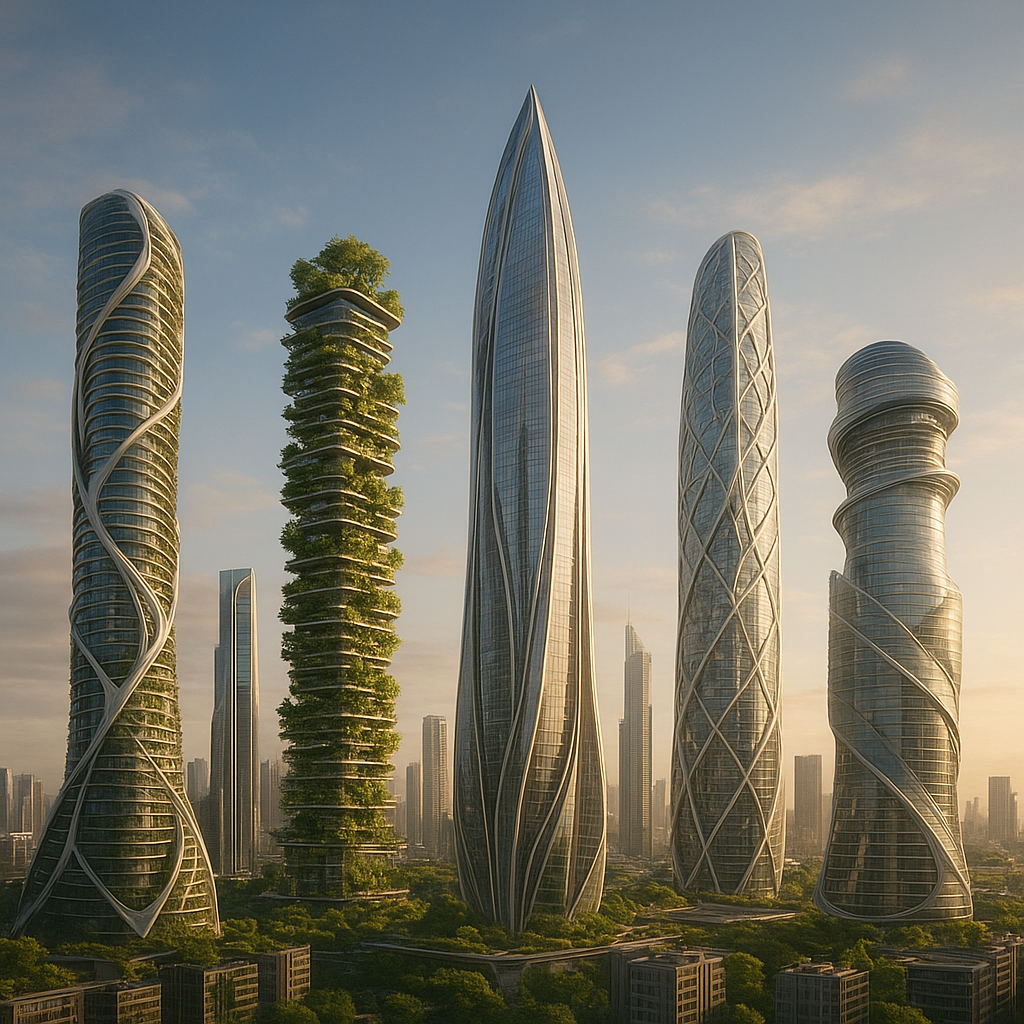
Rising like monumental probes into the atmosphere, tomorrow’s skyscrapers will transcend conventional blueprints to become living, adaptive organisms. This exploration unveils how **innovation**, **sustainability**, and **resilience** converge with advanced **nanotechnology**, **biomimicry**, and **robotics** to redefine vertical urbanism. By examining emerging materials, integrated ecosystems, autonomous construction, and dynamic façades, we glimpse a future where architecture breathes, learns, and seamlessly interacts with its inhabitants and the environment.
Next-Generation Materials and Structural Systems
Traditional steel-and-glass frames give way to **composite** lattices inspired by organic forms. Researchers harness carbon-infused polymers, graphene-reinforced concrete, and self-healing alloys to achieve previously unimaginable strength-to-weight ratios. Through nanotechnology coatings, surfaces repel pollutants, regulate temperature, and even produce electricity from ambient light.
Graphene Composite Skeletons
- Graphene layers embedded in ultra-light concrete reduce mass by over 40 percent.
- Integrated microcapsules of binding agents repair cracks autonomously, ensuring long-term **durability**.
Biomimetic Load Distribution
Inspired by the inner structure of bamboo or the bone matrix of mammals, new truss networks distribute stresses with **optimization** algorithms. These forms shift load paths in real time, countering wind gusts and seismic vibrations with fluid, adaptive reconfiguration.
Vertical Ecosystems and Biophilic Integration
As cities densify, architects embed lush, multi-tiered gardens within high-rises, transforming concrete monoliths into vertical forests. Such living walls serve as carbon sinks, noise buffers, and natural air filters, promoting occupant well-being and urban biodiversity.
Symbiotic Plant Cultivation
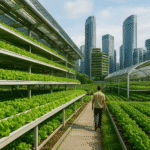
- Hydroponic façades circulate nutrient-enriched water, growing edible crops across dozens of floors.
- Algae bioreactors within glazed façades convert CO₂ into biomass and generate biofuel.
Microclimate Regulation
Smart sensors continuously monitor humidity, sunlight, and pollutant levels. Automated vents and misting systems adjust internal climates, reducing energy consumption and preserving plant health. This **integration** of technology and nature fosters a restorative environment for tenants and wildlife alike.
Autonomous Construction and Robotic Fabrication
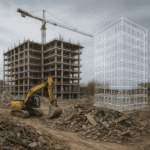
The future skyline will be assembled not by human crews alone but by fleets of specialized drones, 3D printers, and self-guided machines. These autonomous systems execute intricate tasks with **precision**, speed, and minimal waste, overcoming labor shortages and hazardous site conditions.
Aerial Drone Assemblers
- Drones equipped with magnetic grippers install prefabricated panels at dizzying heights, guided by AI-driven alignment protocols.
- Swarm robotics enable parallel workflows, slashing construction time by up to 60 percent.
In Situ 3D Printing
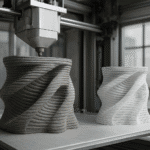
Giant robotic arms extrude high-strength polymers or cementitious mixes directly onsite. Layer by layer, they sculpt curved façades, intricate latticework, and even furniture elements, all coded from parametric models that optimize material use.
Adaptive Skins and Energy Harvesting
Façades evolve into living membranes that regulate heat, light, and airflow. Their dynamic modules respond to environmental stimuli, harvesting **solar**, **wind**, and kinetic energy to power both building systems and local microgrids.
Photochromic Panel Arrays
- Smart glass embedded with perovskite solar cells shifts opacity to control glare while generating electricity.
- Automated louvers adjust angle to optimize daylight penetration and minimize thermal gain.
Piezoelectric Flooring Tiles
High-traffic corridors employ pressure-sensitive floor modules that convert footsteps into usable energy, supporting lighting and sensor networks. This **innovative** solution enhances efficiency in public lobbies and transit hubs within the structure.
Cultural and Social Dimensions of Tomorrow’s Towers
Futuristic skyscrapers must address more than engineering feats; they serve as vertical communities reflecting diverse lifestyles and aspirations. Mixed-use layouts integrate residential pods, office blocks, cultural venues, and even health clinics, fostering self-sustaining microcities in the sky.
Flexible Floorplates
- Modular units adapt over time: family apartments can transform into coworking spaces or clinics via smart partitions and sliding walls.
- Shared amenities—rooftop farms, wellness centers, immersive theaters—encourage social cohesion among occupants from all walks of life.
Digital and Physical Convergence
Augmented reality overlays guide visitors through expansive atria, while interactive walls display real-time environmental data and community announcements. These interfaces blend virtual and physical realms to enhance engagement, safety, and personalized wayfinding.
Resilience, Equity, and the Ethics of Height
Beneath the gleaming exteriors, ethical considerations shape how skyscrapers impact societies. Equitable access to affordable housing, community spaces, and green corridors counters the risk of elitist enclaves. Designs must prioritize disaster resilience, offering refuge during storms or seismic events.
- Emergency cores designed as vertical “safe havens” provide clean air, water, and communications during crises.
- Renewable microgrids with energy storage ensure uninterrupted power for critical systems and low-income residents.
- Transparent governance models invite public input on building programs, green space allocation, and cultural curation.
Conclusion
Architects, engineers, and policymakers converge to craft the next wave of towering landmarks that are not merely monuments of ambition but **adaptive**, **ecological**, and socially responsible environments. As material science, robotics, and digital intelligence mature, skyscrapers will evolve into dynamic ecosystems—ecosystems that breathe with us, respond to us, and ultimately embody our collective quest for sustainable urban futures.