
Exploring the evolution of architectural imagination reveals a world where steel, glass and digital code merge to create structures once confined to science fiction. This article delves into some of the most striking instances in which visionary concepts have materialized, reshaping skylines and challenging the boundaries of engineering.
Skybound Visions: Aerodynamic Skyscrapers
As urban densities soar, architects turn to aerodynamics to sculpt towers that slice through wind loads and maximize structural efficiency. Form-finding tools, often harnessed through wind-tunnel simulations, enable curves and twists that reduce vortex shedding and create visually dynamic facades.
Shanghai Tower
Soaring 632 meters above Pudong’s financial district, the Shanghai Tower employs a 120-degree twist to soften wind forces. Its double-skin facade and spiral form enhance thermal performance, reducing energy consumption by a reported 25%. The tower is a testament to innovation in high-rise design, integrating sky lobbies, green terraces and 106 elevators to knit together mixed-use programs.
Dynamic Tower, Dubai (Concept)
Designed to rotate floor by floor, the Dynamic Tower illustrates the potential of adaptive architecture. Each of its 80 stories moves independently, powered by wind turbines atop the roof, promising a constantly shifting silhouette against the desert sky. Although not yet realized, it serves as a potent symbol of kinetic possibilities in urban form.
Biomimetic Marvels: Nature-Inspired Structures
Borrowing strategies from living organisms, biomimicry transcends aesthetics to solve performance challenges. Architects mimic leaf venation for efficient rainwater distribution or employ shell-inspired geometries for optimized load paths.
Beijing National Stadium (“Bird’s Nest”)
Designed by Herzog & de Meuron for the 2008 Olympics, the lattice of crisscrossing steel evokes a woven nest. Underneath its seemingly random web, a robust structural logic confers seismic resilience, showcasing how biomimicry can inform both form and function.
The Gherkin, London
Foster + Partners’ tower, formally known as 30 St Mary Axe, draws from an aerodynamic egg shape to channel wind around its shell, reducing vortex effects and enabling natural ventilation through spiral atria. This design exemplifies how organic forms lead to sustainability gains in dense urban cores.
- Adaptive facade systems that open and close based on solar exposure
- Passive cooling strategies derived from termite mound structures
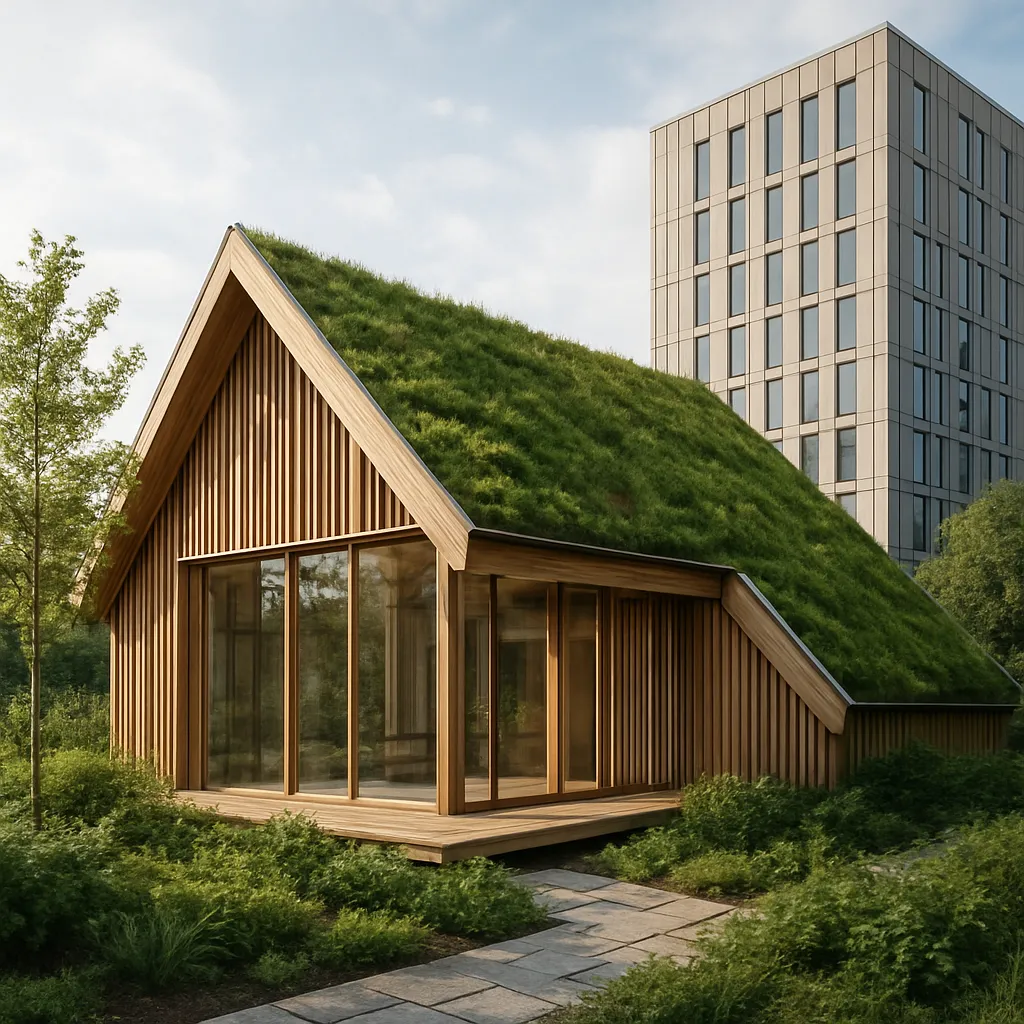
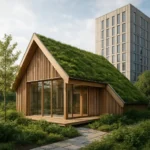
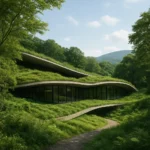
- Green roofs and vertical gardens mimicking forest canopies
Parametric Design and Digital Fabrication
Parametricism, powered by algorithmic rules and computational scripts, has ushered in an era where complex geometries once deemed impractical can be precisely manufactured. Combined with 3D printing and robotic assembly, these methods shorten construction timelines and unlock bespoke detailing.
MX3D Steel Bridge, Amsterdam
Robotic arms welded this pedestrian bridge layer by layer, guided by parametric code. The outcome is a sinuous walkway integrated into the old city’s canal network. It represents a milestone in on-site digital fabrication and paves the way for future nanotechnology-driven material innovations.
Dubai’s Museum of the Future
Curved to perfection, its stainless steel and glass facade conceals an irregular void carved by points within a parametric model. The building’s calligraphic windows, crafted with robotic precision, blur the line between art and architecture, embodying the spirit of regenerative design by incorporating energy-generating photovoltaic elements.
Structural Poetry: Ultra-Light Tensile Membranes
Tensile architecture exploits materials in tension rather than compression, achieving spectacular spans with minimal mass. Lightweight membranes, often PTFE-coated or ETFE foil, enable ethereal roofs and pavilions that respond dynamically to environmental loads.
Munich Olympic Stadium
The 1972 Olympic complex by Frei Otto pioneered tensile fabrics supported by stainless steel cables. Its translucent canopies hover above spectator terraces, offering shelter with an almost poetic lightness—a hallmark of innovation in structural expression.
Heydar Aliyev Center, Baku
Zaha Hadid’s masterpiece flows like a single continuous surface, its shell achieved through an intricate steel and glass fiber composite system. The building’s fluidity rejects traditional orthogonality, hinting at the limitless potential of parametric form-finding.
Responsive and Sustainable Façade Systems
Next-generation exteriors act as living skins, modulating light, heat and airflow to maintain occupant comfort and reduce mechanical loads. Integrating sensors and actuators, these systems respond in real time to shifting climatic conditions.
- Electrochromic glass panels that tint on command to control glare
- Ventilated double-skin facades with automated louvers
- Vertical farms embedded into curtain walls for local food production
Buildings like the Al Bahar Towers in Abu Dhabi incorporate a mashrabiya-inspired shading device that opens and closes hundreds of interlocking elements according to sun angle, achieving up to 50% savings in cooling loads. Such adaptive strategies epitomize the fusion of tradition and cutting-edge technology.
The Metaverse and Virtual Architecture
As digital realms converge with physical environments, architects are designing for the metaverse as diligently as for concrete foundations. Virtual buildings explore gravity-defying geometries, interactive surfaces and parametric customization at scale.
Decentraland’s Bauhaus District (Concept)
Envisioned as a real-time 3D extension of the Bauhaus ethos, this virtual campus showcases modular pavilions that users can reconfigure. It highlights the role of procedural design in both virtual and real-world practice.
AR-Enhanced Heritage Tours
Augmented reality overlays reconstruct lost monuments on existing cityscapes, offering immersive experiences without new construction. These initiatives demonstrate how digital architecture can preserve cultural memory while introducing new narratives.
Urban Ecology and Vertical Landscapes
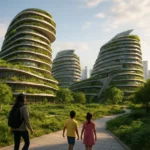
Confronted with global challenges like overpopulation and climate change, architects propose vertical ecosystems: skyscrapers that breathe, cultivate and recycle within self-contained cycles.
- Sky gardens providing microclimates and social spaces
- Hydroponic farms stacked in modular volumes
- Rainwater harvesting integrated into structural slabs
Stefano Boeri’s Bosco Verticale in Milan plants 800 trees across two residential towers, mitigating CO₂ emissions and fostering urban biodiversity. Such projects underscore the pursuit of sustainability through living architecture, where buildings function as active participants in ecological networks.