








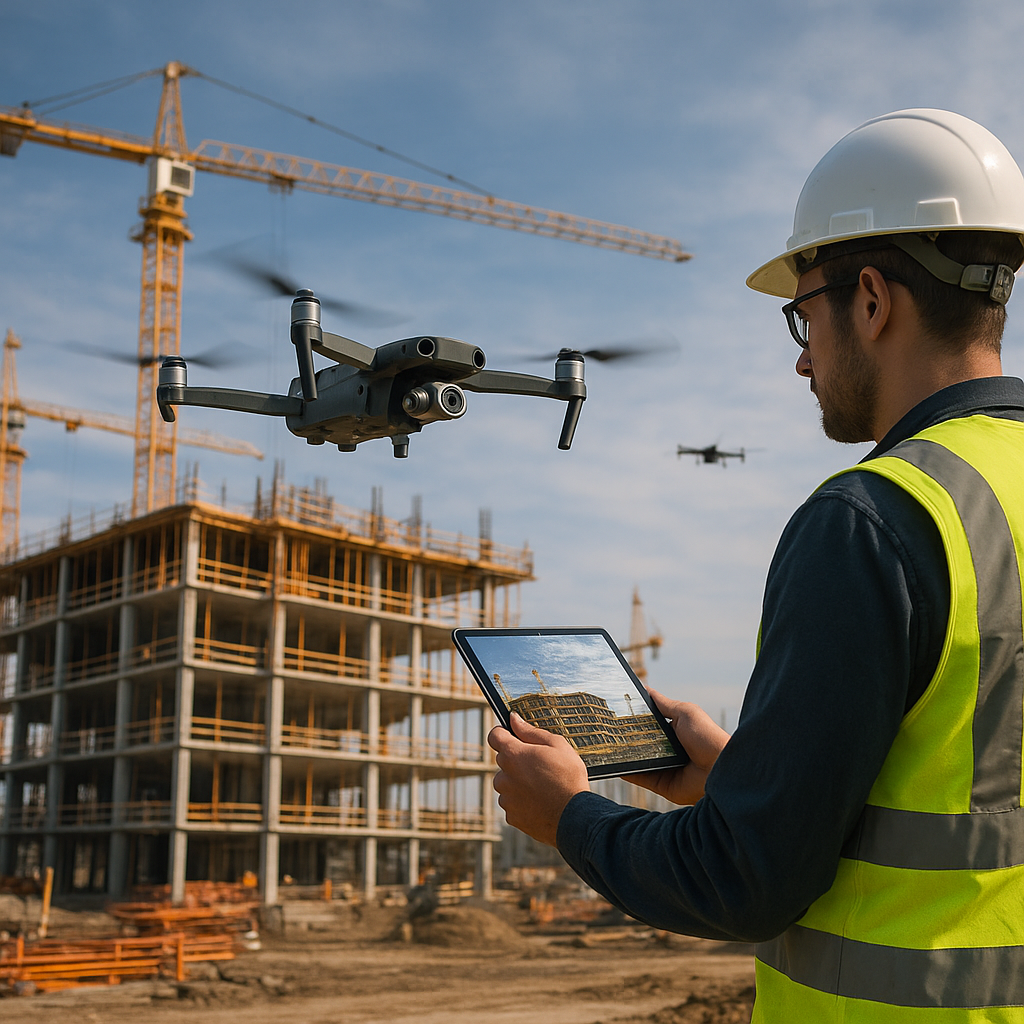
Embracing the next wave of construction innovation, the integration of drones promises a revolution in site management, design exploration, and material logistics. These aerial workhorses, empowered by advanced autonomy and data-driven intelligence, are set to transform the landscape of futuristic architecture. From real-time surveys to on-the-spot fabrication, these machines push the boundaries of what builders can achieve, unlocking levels of precision and efficiency once thought impossible.
Technological Foundations of Drone Integration
At the heart of this paradigm shift lies a fusion of robotics, artificial intelligence, and next-generation sensor arrays. Modern construction drones are equipped with LiDAR scanners, high-resolution cameras, and thermal imaging systems, enabling them to capture an unparalleled amount of spatial data. Their autonomous flight controls rely on machine-learning algorithms that can navigate complex urban environments, avoiding obstacles and optimizing flight paths in real time.
Autonomous Flight Controls
Traditional remote-controlled copters have given way to self-steering models that can execute pre-programmed missions with millimeter-level accuracy. By harnessing simultaneous localization and mapping (SLAM) techniques, these drones build detailed 3D maps of job sites on the fly. This capability allows contractors to conduct volumetric analyses of excavation pits or verify the exact placement of structural modules without setting foot on hazardous terrain.
Advanced Sensor Arrays
Equipped with multispectral cameras and environmental sensors, drones can now assess material stress, detect temperature anomalies in curing concrete, and monitor air quality around heavy machinery. The integration of thermal imaging helps identify hotspots in welds or electrical installations, significantly reducing the risk of structural failures. This high-fidelity data stream ensures that engineering decisions are grounded in rich, real-world insights rather than static blueprints.
Transforming Site Management and Safety
Construction sites of the future will be orchestrated like symphonies, with drones acting as eyes in the sky and autonomous vehicles moving in seamless coordination. By automating repetitive tasks, companies can redeploy human workers to roles requiring critical thinking and problem-solving skills, fostering a culture of innovation and human-machine collaboration.
Real-Time Monitoring and Site Surveys
Weekly manual surveys become obsolete when drones can perform continuous inspections, generating up-to-the-minute status reports. With cloud-based dashboards, project managers can visualize progress through interactive 3D models that update live. This level of oversight eliminates costly rework by catching discrepancies early and streamlines communication between architects, engineers, and on-site teams.
- Enhanced safety through remote hazard detection
- Accelerated decision-making via instant data uploads
- Improved resource allocation by mapping material stockpiles
- Reduced insurance premiums thanks to comprehensive risk assessments
Automated Material Delivery
Beyond data collection, drones are increasingly tasked with transporting lightweight building components, tools, or medical supplies on sprawling megaprojects. Utilizing vertical takeoff and landing (VTOL) capabilities, they bypass congested ground routes, delivering payloads directly to high-rise façades or isolated platforms. This method slashes delivery times and minimizes interference with pedestrian and vehicle traffic.
Architectural Innovation and Drone-Enabled Design
As designers push the envelope of what is structurally possible, drones become integral to both the conceptual and construction phases of radical new forms. These aerial collaborators not only capture environmental data but also assist in the assembly of intricate geometries and modular units.
Complex Geometry Fabrication
Parametric design tools now feed instructions directly to fleets of micro-drones that spray, weld, or lay down composite fibers layer by layer. This additive manufacturing approach enables the creation of undulating shells, twisting columns, and free-form canopies without the need for expensive custom molds. The result is architecture that responds to organic principles found in nature, while maintaining structural integrity.
Modular Construction Pioneers
In modular projects, drones precisely position prefabricated modules, aligning them with sub-centimeter accuracy before cranes or robotic arms finalize the connection. This aerial assistance accelerates the erection of temporary shelters in disaster zones and permanent structures in dense urban cores. With minimal on-site labor, developers can meet urgent housing needs or test-build avant-garde prototypes in weeks rather than months.
Overcoming Challenges and Charting the Future
Despite their promise, drone-integrated construction faces hurdles in regulation, energy management, and cybersecurity. Aviation authorities worldwide are still crafting airspace guidelines for commercial drone operations, creating a patchwork of compliance requirements. On the technical side, battery life remains a bottleneck, with current cells offering less than an hour of active flight under full load.
- Regulatory alignment to ensure safe UAV corridors
- Development of high-density power sources for extended missions
- Robust encryption and authentication to prevent unauthorized takeovers
- Integration with existing Building Information Modeling (BIM) systems
As the sector converges around shared standards and breakthroughs in lightweight materials and AI-driven autonomy, drones will cement their role as indispensable partners for architects, engineers, and builders. The result is a more sustainable, agile, and modular approach to construction—one where the sky is not the limit, but the gateway to unprecedented creativity and performance.