





Artificial intelligence has begun to reshape the way architects conceive of space, form, and function. By harnessing the power of generative algorithms, designers can explore uncharted territories of innovation and material expression. This article dives into the synergy between futuristic architecture and AI-driven artistry, illustrating how cutting-edge tools are unlocking a new era of limitless creativity.
AI as a Creative Collaborator in Futuristic Design
The relationship between architects and AI tools is rapidly evolving from simple drafting aids to full-fledged creative partners. Rather than replacing human ingenuity, these systems serve as catalysts for groundbreaking visions. With machine learning models trained on vast archives of historical and contemporary structures, designers can experiment with forms that push the boundaries of feasibility and aesthetic appeal.
Key advantages of AI-assisted design include:
- Rapid exploration of hundreds of design variations in minutes
- Optimization of structural integrity through algorithmic analysis
- Integration of environmental data for eco-friendly solutions
- Real-time feedback loops that refine concepts as they emerge
By leveraging AI, architectural firms can reduce the time spent on repetitive tasks, freeing creative teams to focus on conceptual breakthroughs. The result is a more agile, responsive design process where each iteration is informed by data-driven insights and artistic intuition alike.
Algorithmic Dreams: Generative Design and Parametric Forms
Generative design marks a paradigm shift in how buildings are conceptualized. Instead of manually sketching forms, architects input performance criteria—such as light penetration, airflow, and load distribution—into an AI engine. The system then produces a multitude of solutions, each optimized for different trade-offs.
Parametric Modeling Unleashed
Incorporating parametric modeling enables dynamic adjustment of design parameters, creating fluid, organic geometries that were once impossible to draft by hand. Parameters can be anchored to:
- Site orientation and topography
- Solar exposure and seasonal lighting patterns
- Pedestrian flow and spatial connectivity
- Material efficiency and cost constraints
These adaptive frameworks produce structures that seem alive—responsive to their environment, efficient in resource use, and visually captivating.
Biomimicry Meets Machine Learning
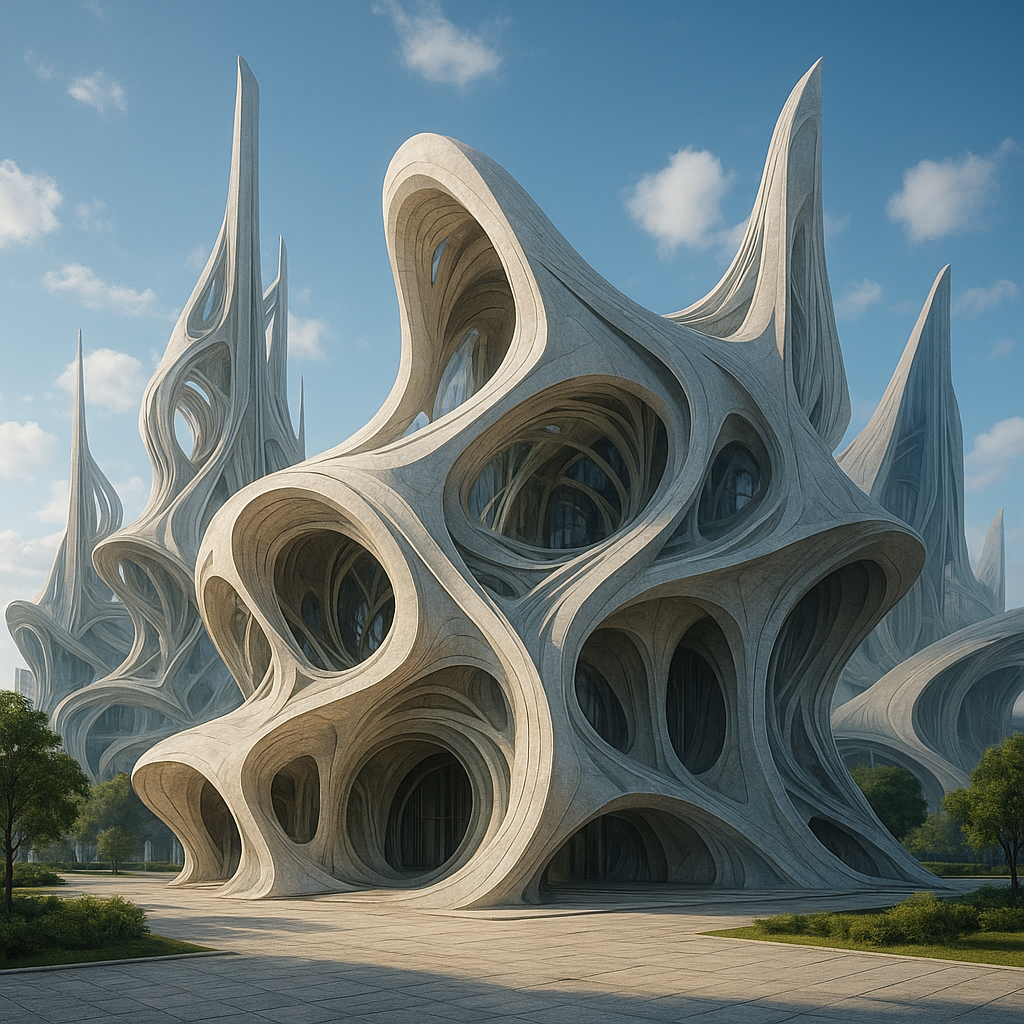
The intersection of biomimicry and AI has led to some of the most exhilarating futuristic proposals. Drawing inspiration from natural forms—such as tree canopies, snail shells, and bone structures—AI models emulate evolutionary optimization processes. This results in architectural shells that provide maximum strength with minimal material waste. In some instances, researchers have even utilized 3D-printed components to replicate these intricate patterns at scale.
From Concept to Reality: AI-Driven Construction and Materials
AI’s influence extends beyond the drawing board into the realm of fabrication and construction. Intelligent robotics, advanced sensors, and automated machinery are increasingly commonplace on futuristic building sites.
Robotics and On-Site Automation
Collaborative robots (“cobots”) equipped with advanced vision systems can lay bricks, assemble panels, and weld joints with millimeter precision. By employing automation, construction timelines shrink while on-site errors virtually disappear. Integration with AI planning platforms ensures that each brick or beam is placed according to the optimized digital blueprint.
Smart Materials and Responsive Facades
Innovations in material science, guided by AI, have yielded dynamic building envelopes that adapt to changing conditions. Examples include:
- Electrochromic glass that adjusts transparency to control glare and heat gain
- Phase-change materials that store and release thermal energy for indoor comfort
- Self-healing concretes infused with microcapsules that repair micro-cracks
- 3D-printed composites with embedded sensors for structural health monitoring
These smart materials embody the notion of a living structure—capable of reacting to occupancy, climate fluctuations, and even seismic events in real time.
Ethics, Sustainability, and the Future Skyline
As AI-driven architecture accelerates, the profession must confront ethical and environmental considerations. While creative freedom expands, designers bear responsibility for the planet and its inhabitants.
Balancing Creativity and Carbon Footprint
The computational demands of large-scale AI models can consume significant energy resources. It becomes critical to weigh the carbon footprint of training and running these systems against the environmental gains achieved through optimized designs. By prioritizing low-power hardware and green data centers, architects can ensure that the virtual leaps forward do not come at an ecological cost.
Privacy, Surveillance, and Occupant Well-being
Implementing AI-enabled sensors for building management raises questions about data privacy and occupant autonomy. Intelligent monitoring systems can enhance safety, but they must be designed with robust safeguards to prevent misuse. Striking the right balance between security, convenience, and personal freedom is paramount in shaping humane, autonomous architectural environments.
Inclusive Design for a Global Audience
AI algorithms trained on narrow datasets risk perpetuating biases in spatial layouts and access provisions. Architects must deliberately curate training data to embrace cultural diversity, universal accessibility, and social equity. In doing so, the futurescape of our cities will reflect the varied needs of all communities, not just the technologically privileged few.
Immersive Experiences: Digital Twins and Virtual Collaboration
Beyond physical form, AI is transforming how stakeholders interact with designs. Immersive virtual and augmented reality platforms allow clients to walk through proposed projects long before a single beam is erected. This collaborative ecosystem accelerates decision-making, reduces costly revisions, and nurtures deeper emotional connections between users and spaces.
- Real-time environmental simulations for daylighting and acoustics
- Multi-user virtual meetings inside hyper-realistic building models
- Gesture-based editing of spatial elements within virtual environments
- Integration with building management systems for remote performance tracking
The seamless convergence of the physical and digital realms promises an era where architectural creativity is unconstrained by traditional limitations and powered by machine intelligence.