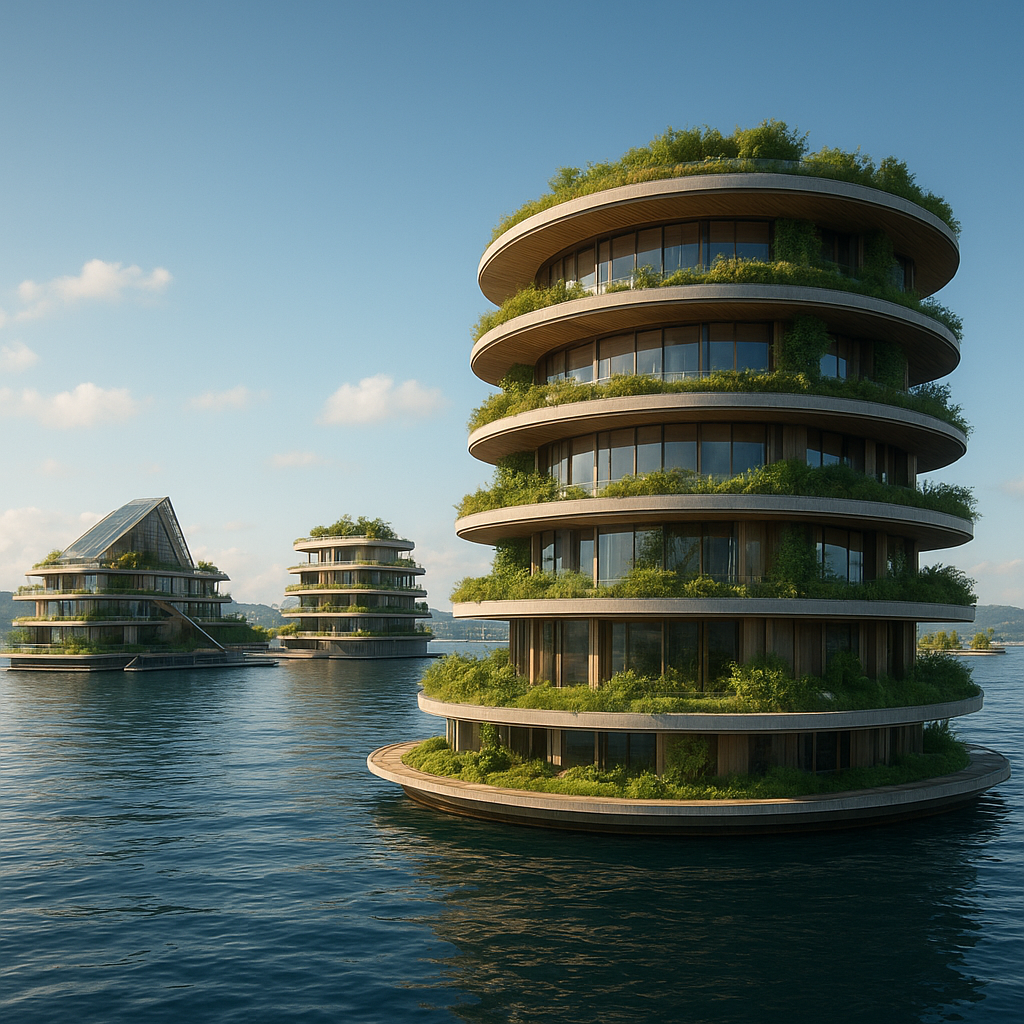
Emerging from the confluence of environmental urgency and technological ambition, floating communities promise to redefine our relationship with the oceans. Harnessing innovations in sustainability and advanced materials, architects and engineers envision resilient habitats that navigate rising sea levels and shifting climates. This exploration delves into the architectural frameworks, energy systems, and societal dynamics that will shape these maritime marvels.
Vision of Floating Urbanism
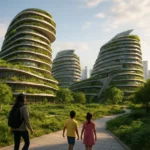
The prospect of entire neighborhoods drifting along ocean currents may once have seemed the realm of speculative fiction, but today’s research efforts paint a more tangible picture. At the heart of this concept lies buoyancy management: structures must remain stable even as waves, tides, and storms exert unpredictable forces. Pioneering designs employ modularity, assembling individual platforms that can connect, disconnect, or realign in response to changing environmental conditions. A network of linked modules can form streets, plazas, and communal spaces, all while preserving the ability to reconfigure when expansion or relocation becomes necessary.
These floating cities embrace a philosophy of resilience. Each module may include integrated sensors that continuously monitor movement, load distribution, and water infiltration. When thresholds are exceeded, automatic adjustments—such as ballast redistribution or retractable stabilizers—activate to maintain equilibrium. Urban planners are exploring dynamic zoning, allowing residential, commercial, or agricultural segments to interchange based on seasonal needs or demographic shifts. The result: a living system that flexes like a biome rather than a rigid edifice anchored to the seabed.
Innovative Structural Systems
Construction in a marine environment demands materials and techniques that can withstand corrosion, biofouling, and relentless mechanical stress. Advanced composites, ceramics, and biomimetic coatings offer superior resistance to saltwater degradation. Some research groups are experimenting with self-healing concretes infused with bacterial spores that precipitate minerals to fill microcracks. Others champion composite lattices inspired by the internal structure of sea shells, merging lightweight frames with unparalleled strength.
Under each platform, arrays of pontoons and hollow chambers ensure sufficient displacement, while interior frameworks utilize tensegrity principles to distribute load. Engineers propose multi-hull configurations, akin to catamarans, to lower the center of gravity and increase lateral stability. In deeper waters, mooring lines tethered to seabed anchors provide positional control, whereas in shallower zones, adaptable pilings can rise and fall with tidal fluctuations. This amalgamation of forces demands rigorous simulation during the design phase, with computational fluid dynamics (CFD) models predicting interactions between modules and the ever-changing marine environment.
Energy and Resource Autonomy
To thrive far from traditional infrastructure, floating settlements must achieve near-complete self-sufficiency. Renewable energy drives every function, from climate control to food production. Solar arrays integrated into roof membranes capture sun rays across the water’s reflective surface. Simultaneously, hydrokinetic turbines anchored beneath platforms harness tidal and current flows, converting kinetic energy into a steady power supply. Combining these sources with advanced energy storage—such as solid-state batteries or hydrogen fuel cells—ensures uninterrupted electricity even during calm weather or seasonal lulls.
Water management is equally critical. Floating farms and biofiltration wetlands within the modules perform dual roles: purifying greywater and cultivating high-yield crops. Aquaponic systems recycle nutrients from fish ponds to nourish vegetable beds, creating ecosystems that mirror coastal marshes. Desalination units, powered by waste heat or solar thermal collectors, supply potable water, while nutrient recovery processes extract fertilizer precursors from organic waste. This closed-loop approach minimizes reliance on external supplies and reduces ecological footprints.
Social and Cultural Implications
Beyond engineering marvels, floating communities herald new social paradigms. Freed from terrestrial constraints, inhabitants can partake in collaborative governance models, making decisions through decentralized digital platforms. Virtual town halls facilitate real-time participation, while AI-driven analytics help synthesize public opinion and optimize communal resource allocation. Shared spaces—such as markets, schools, and creative studios—are designed with adaptable layouts, enabling customization for festivals, educational workshops, or cultural exhibitions.
The maritime context fosters a distinct cultural identity, centered on marine stewardship and ocean literacy. Residents engage in citizen science projects, deploying sensor arrays to track biodiversity, water quality, and climate indicators. Art installations utilize submerged LED arrays to illuminate underwater life, fostering an emotional connection to the surrounding habitat. Community rituals may revolve around lunar cycles, commemorations of migratory species, or harvest celebrations from floating gardens. In this way, the architecture becomes a vessel for collective memory, weaving human narratives into the tapestry of the sea.
Challenges and Future Directions
Despite its promise, the path to widespread adoption of floating habitats faces significant hurdles. Regulatory frameworks must evolve to address maritime jurisdiction, property rights, and environmental protections in international waters. Financial investment models need to reconcile high upfront costs with long-term returns, perhaps through public-private partnerships or climate adaptation funds. Technical challenges—such as scaling hydroponic agriculture or ensuring redundancy in critical systems—require ongoing research and iterative prototyping.
- Adaptive maintenance regimes: Continuous inspection by autonomous drones and submersibles to detect wear and damage.
- Climate modeling: Predictive algorithms to plan safe migration routes for clusters of modules as sea conditions shift.
- Cross-disciplinary collaboration: Architects, marine biologists, urban planners, and sociologists working in concert to refine living protocols.
- Material innovation: Development of ultra-durable, low-embodied energy composites for sustainable construction.
- Community integration: Frameworks for incoming populations, ensuring equitable access and cultural exchange.
The realization of floating cities hinges on our collective capacity to blend creativity with scientific rigor. As prototypes take shape in sheltered bays and test sites around the globe, the lessons learned will inform the next generation of designs, ultimately charting a course toward a future where humanity coexists harmoniously with the world’s oceans.