



As cities grapple with shrinking arable land and rising sea levels, the concept of floating farms emerges as a beacon of innovation in **sustainability** and urban food production. Merging advanced **hydroponic** systems with buoyant architecture, these water-borne agri-hubs promise to redefine how communities grow and consume fresh produce. By embracing modular design, renewable energy, and closed-loop **aquaponics**, floating farms offer resilient solutions against climate shocks while fostering localized ecosystems of food security.
Design Principles Behind Floating Farms
Modular and Biomimetic Structures
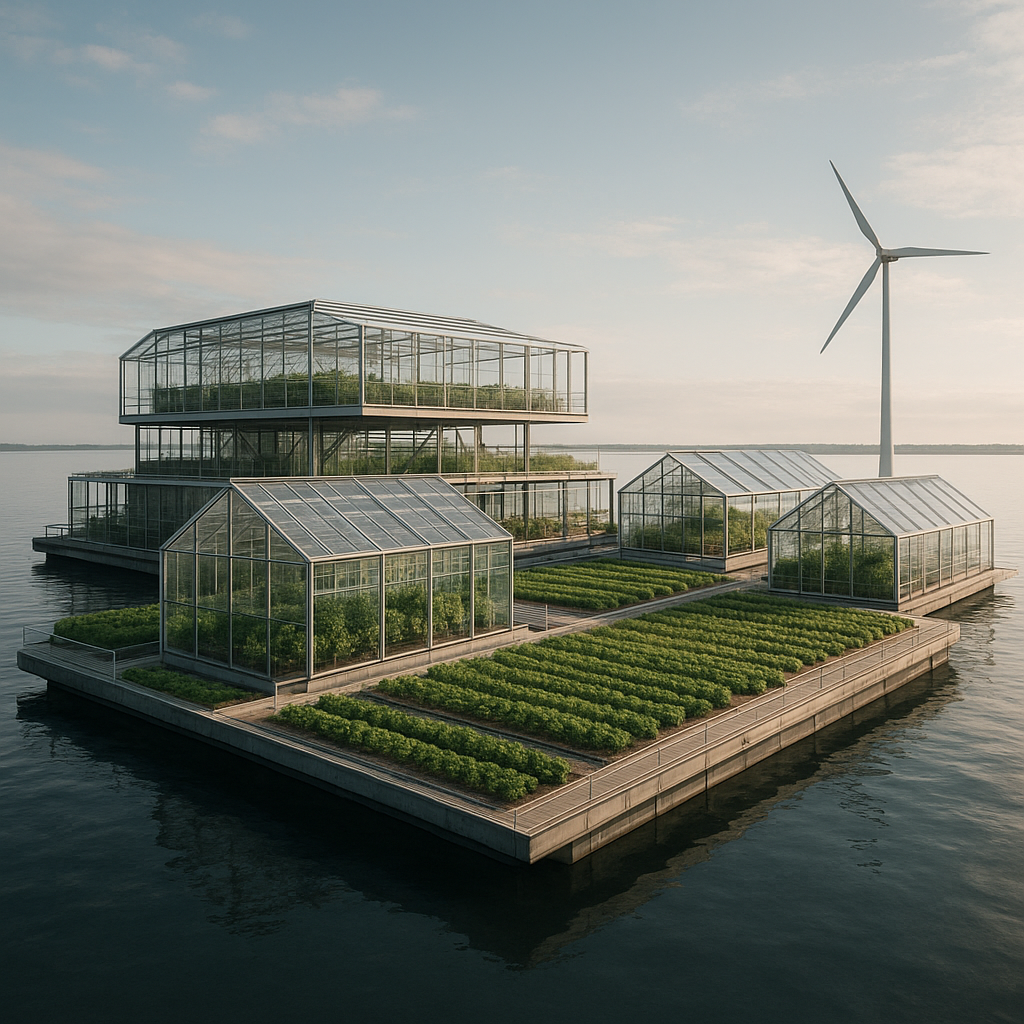
At the heart of floating farms lies a philosophy of modularity. Individual platforms, each housing nutrient channels, fish tanks, and plant beds, can be linked to form expansive clusters that grow or shrink with demand. Inspired by nature’s fractal patterns, architects employ biomimetic geometries to balance buoyancy, wave resistance, and structural integrity. Honeycomb-style hulls, for instance, distribute loads evenly, reducing material use and improving overall efficiency.
Marine-grade composites and recycled plastics furnish the hulls with corrosion resistance, while carbon-fiber reinforcements ensure longevity against pounding seas. Decks are arranged in multi-tiered layers that maximize vertical cultivation, transforming the water’s surface into lush, floating gardens.
Resilience to Climate Change
By situating agricultural infrastructure on water, floating farms circumvent the threats of drought, soil erosion, and land subsidence. Elevated platforms adapt automatically to tidal fluctuations, maintaining consistent growing conditions. External sensors monitor wave heights, storm surges, and salinity, triggering dynamic ballast adjustments to preserve stability. This built-in resilience allows floating farms to thrive even as traditional farms face increasing uncertainty.
Furthermore, integrating wave-energy converters beneath the platforms harnesses ocean motion to power onboard pumps and lighting systems. Solar arrays on upper decks contribute additional renewable power, rendering these installations largely energy-self-sufficient.
Technological Innovations Driving Vertical Aquaponics
Closed-Loop Systems for Water Recycling
Floating farms leverage **aquaponics**—a symbiotic blend of aquaculture and hydroponics—to create nutrient-rich environments with minimal waste. Fish effluent supplies essential nitrates for plant growth, while plant roots filter and purify water before it returns to the fish tanks. This closed-loop cycle slashes freshwater usage by up to 90% compared to conventional agriculture.
Sophisticated monitoring networks track pH levels, dissolved oxygen, and nutrient concentrations in real time. Machine-learning algorithms predict fish feeding schedules and plant nutrient demands, fine-tuning water circulation to optimize yields. The result is a self-regulating ecosystem where less human intervention is needed, and **efficiency** reaches unprecedented levels.
Energy and Resource Efficiency
Beyond water savings, floating farms minimize energy consumption through renewable sources and smart grid integration. Flexible photovoltaic membranes drape over upper frames, harvesting sunlight while providing shade for sensitive crops. Wind turbines mounted on masts capture ambient air currents. Excess power feeds into battery banks or is returned to coastal microgrids, creating a two-way energy exchange between the farm and the city.
- Automated LED lighting supplements natural daylight, adjusting spectra to accelerate photosynthesis during overcast days.
- Thermal insulation layers and phase-change materials regulate greenhouse temperatures, reducing heating and cooling loads.
- Robotic arms perform precision tasks—seeding, pruning, and harvesting—cutting labor costs and ensuring consistent product quality.
Environmental Benefits and Climate Resilience
Floating farms confer multiple environmental advantages. By relocating agriculture to waterways, they preserve vital terrestrial habitats and prevent further deforestation. Proximity to urban centers eliminates long‐haul transport, drastically lowering carbon emissions associated with food logistics. The closed‐loop aquaponic cycles reuse waste, mitigating nutrient runoff that often contributes to harmful algal blooms in coastal zones.
- Reduced Water Footprint: High-yield cultivation uses minimal freshwater, crucial in drought-prone regions.
- Local Food Security: Year-round produce supply bolsters community resilience during extreme weather events.
- Carbon Sequestration: Aquatic plant species integrated into the perimeter structure can absorb CO₂ directly from the atmosphere.
- Marine Biodiversity: Submersed modules serve as artificial reefs, fostering new habitats for fish, crustaceans, and invertebrates.
By harnessing the cooling properties of water bodies, floating farms require less energy for climate control compared to land-based greenhouses. This synergy between architecture and environment embodies the renewable ethos of tomorrow’s cities.
Challenges and Future Prospects
Despite their promise, floating farms face hurdles in regulation, capital costs, and public acceptance. Coastal zoning laws often lack provisions for aquaculture infrastructure, requiring stakeholders to navigate complex permitting processes. Initial investments in specialized materials, sensors, and robotic systems can be high, though economies of scale are expected to drive prices down as prototypes evolve into mass-produced modules.
Community outreach and education play a pivotal role in social adoption. Demonstration farms and interactive tours help demystify the technology, showcasing how habitat coexistence and urban food systems can harmonize on water. Partnerships with universities, engineering firms, and nonprofit organizations accelerate research into algae integration, offshore scalability, and disaster-proof anchoring mechanisms.
Looking ahead, floating farms could integrate into larger networks of amphibious infrastructure—combining housing, recreation, and renewable power generation. Imagine aquaculture parks that host public markets, educational centers, and energy hubs, all afloat in symbiosis with coastal ecosystems. As architects and engineers collaborate across disciplines, these waterborne farms will chart a course toward **sustainability**, **urbanization** resilience, and a more secure food future for generations to come.