

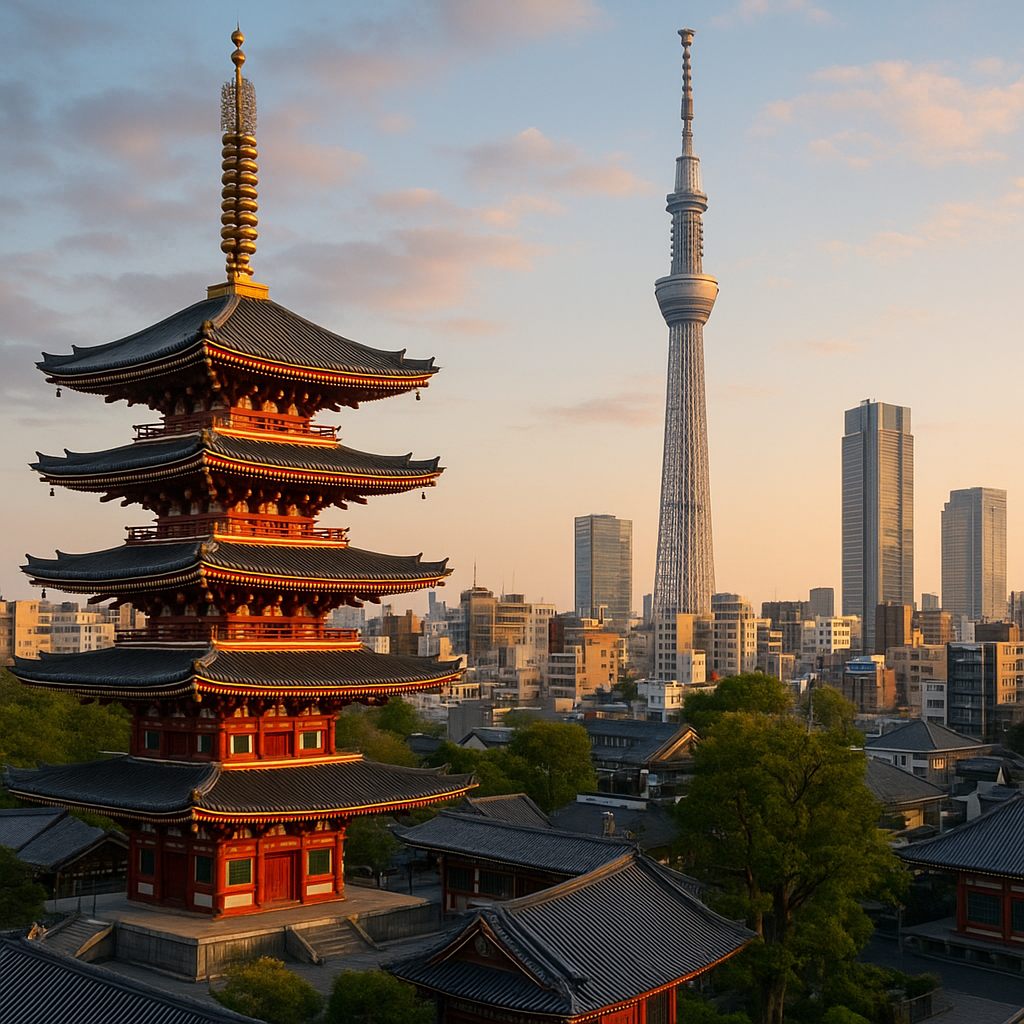
Tokyo is a city where neon lights, skyscrapers and high-tech gadgets exist side by side with wooden shrines, tea houses and centuries-old rituals. Walking through its streets, you may pass a serene temple courtyard just a few minutes after leaving a busy gaming arcade. This unique balance makes Tokyo more than a modern metropolis; it is a living museum of Japan’s past and a laboratory of its future. Travelers who want to understand how these worlds coexist can explore stories, tips and local insights on realtokyo24.com, and then experience them firsthand among the city’s neighborhoods, festivals and everyday scenes that showcase Tokyo’s ongoing dialogue between heritage and innovation.
The city as a living timeline
Tokyo’s landscape reads like a timeline laid out in concrete, glass and stone. In districts such as Asakusa, you find cobblestone lanes, paper lanterns and incense drifting from Senso-ji Temple. Only a few train stops away, in Shinjuku or Shibuya, the view explodes into LED billboards, high-rise offices and vast train stations pulsing with commuters.
This contrast is not accidental. Tokyo has been rebuilt multiple times after fires, earthquakes and war, which gave planners a chance to weave modern infrastructure into long-standing neighborhoods. Rather than separating the old and the new, the city allows them to overlap. A small shrine can be tucked between two office towers, and a traditional bathhouse might stand in the shadow of a new condominium. Everyday life continues around these structures, turning the entire city into a quiet conversation between eras.
Historic districts amid glass towers
Several areas of Tokyo showcase this blending especially clearly. Asakusa keeps the atmosphere of Edo-period Tokyo, with shopfronts offering rice crackers, folding fans and yukata robes. At the same time, visitors snap photos with smartphones, and nearby cafés serve espresso alongside matcha. Look up and you will see the futuristic silhouette of Tokyo Skytree in the distance, binding the historical scene to the present skyline.
In Yanaka, one of the few districts that survived wartime bombings, narrow streets, wooden houses and small workshops evoke a slower rhythm. Yet convenience stores, fiber-optic internet cables and modern rail lines run unobtrusively through the area. The district thrives not because it is a frozen museum, but because residents accept technology while preserving the pace and aesthetic of older Tokyo.
Even in hypermodern Odaiba, built on reclaimed land with shopping malls and entertainment complexes, you can find nods to tradition in seasonal festivals, fireworks over the bay and carefully tended waterfront shrines. The message is simple: new districts do not erase the past; they reinterpret it for a different environment.
Temples, shrines and skyscrapers
Religious sites play a central role in how Tokyo harmonizes tradition and modernity. Shrines and temples occupy valuable land, yet the city grows up around them rather than pushing them aside. You might see salarymen stopping at a shrine during lunch, pausing in front of a torii gate framed by glass facades and office windows.
Tokyo’s planning regulations and cultural attitudes both help sustain this coexistence. The reverence for ancestral spirits and local deities makes it socially difficult to remove historic religious structures. Instead, designers integrate them into commercial complexes and residential towers. A shrine courtyard becomes a pocket of greenery and reflection; its stone lanterns share the skyline with mirrored elevators and rooftop gardens.
Nighttime offers some of the most striking scenes: temple roofs outlined against a backdrop of corporate logos, or a pagoda gleaming softly while surrounding streets blaze with LED light. For many residents, this is not a conflict but a visual summary of their daily lives in a city where faith, work and leisure constantly overlap.
Traditional arts in a digital age
Tokyo’s cultural life also mirrors this fusion. Classical arts such as kabuki theater, noh performance and tea ceremony are still practiced, but their audiences often discover them through online ticketing platforms, streaming clips and social media. A visitor might see a centuries-old play after following a recommendation on a video app.
Workshops in calligraphy, ikebana flower arranging or kimono dressing now welcome international guests who found them through digital platforms. Inside, the atmosphere remains quiet and formal: brushes glide over rice paper, and seasonal flowers are arranged with careful attention to balance. Outside, participants take photos, share them online and help introduce these art forms to a global audience.
Modern museums and galleries in Roppongi or Ueno frequently pair historical artifacts with interactive displays. Holograms, touchscreens and projection mapping help explain samurai armor, woodblock prints or Buddhist sculpture to a generation raised on digital interfaces. This combination protects fragile works while speaking in a visual language that feels natural to younger visitors.
Cuisine: from ramen alleys to robot restaurants
Food culture is one of the clearest ways Tokyo blends tradition with modernity. Time-honored sushi counters in Ginza serve meticulously crafted pieces to customers who might have reserved a seat months in advance through an online system. The techniques, knives and etiquette remain rooted in Edo-period sushi stalls, but the booking and conversation often happen on smartphones.
In contrast, themed cafés and high-tech dining spaces use projection mapping, robots or tablet ordering to entertain guests. Yet even there, the underlying cuisine often depends on regional ingredients, seasonal fish and the same meticulous standards that define Japanese cooking. Technology provides the spectacle; culinary tradition provides substance.
Ramen alleys under train tracks show another layer of this mix. Many shops maintain narrow counters, steamy pots and handwritten menus, but accept digital payment and share updates through social media. Locals and tourists sit shoulder to shoulder, slurping bowls whose recipes may have been refined for decades, while trains rumble overhead and LED lights reflect on the soup’s surface.
Craftsmanship and cutting-edge design
Tokyo’s artisans illustrate how **craftsmanship** can evolve without losing its roots. Makers of knives, lacquerware, ceramics and textiles continue to operate in small workshops that look almost unchanged from previous generations. Inside, however, they sometimes use computer-aided design, advanced kilns or modern alloys to achieve more precise results.
Young designers collaborate with these masters to create products that feel at home in both a traditional tatami room and a minimalist apartment abroad. A hand-dyed indigo fabric becomes a laptop sleeve; a classic pattern is adapted for smartphone cases or modern lighting. In this way, Tokyo’s design scene becomes a bridge between global trends and local heritage.
Retail spaces echo this marriage of eras. Minimalist boutiques display handcrafted items in sleek interiors of glass and stone. Signage stays understated, allowing the textures of wood, ceramic and metal to stand out against a contemporary backdrop. The result is a sense that modern Japanese design is not a break from the past but a continuation of it, refined through new materials and tools.
Transportation and urban rhythm
Tokyo’s transportation network is a symbol of its modern efficiency, yet it also guards elements of tradition. The high-speed Shinkansen glides into stations where station bentos showcase local recipes and regional crafts through package design. Commuters check train times on apps, but seasonal decorations on platforms follow long-standing customs tied to cherry blossoms, summer festivals or autumn leaves.
In older neighborhoods, streetcars and local buses maintain a slower pace. Elderly residents use prepaid IC cards while chatting with neighbors they have known for years. Bicycles lean against low walls near shrines, and children in uniforms walk to school along routes that have changed little, even as 5G antennas rise above them.
Tokyo’s rhythm depends on punctuality, yet that precision coexists with rituals like New Year’s shrine visits, summer obon dances and autumn festivals that temporarily close streets to traffic. During these events, portable shrines move where taxis usually wait, and the sound of traditional drums replaces car horns. The city pauses its rush without fully halting, allowing heritage to step into the center of daily movement.
Technology embedded in everyday rituals
For many residents, technology does not replace tradition; it reinforces it. Online calendars remind families of upcoming festivals at their local temples. Digital maps guide visitors through historic walking routes, highlighting trees, monuments and long-standing shops that might otherwise be overlooked.
At the same time, some rituals adapt to urban realities. People still buy omamori protective charms, but they may attach them to laptop bags or car keys. Couples visit shrines to pray for safe childbirth, then share ultrasound images via messaging apps. Tea ceremonies are filmed on high-resolution cameras, preserving nuances of movement that older generations could only describe verbally.
This layering shows how innovation in Tokyo operates: rather than sweeping away older customs, it nests around them, offering new ways to practice, record and share what matters. Smartphones and fiber-optic networks become tools that carry ancient gestures into a digital future.
Architecture: contrast and harmony
Tokyo’s architecture often juxtaposes concrete minimalism with ornate traditional elements. Contemporary houses in residential districts may incorporate sliding doors, tatami mats and small inner gardens. From the street, they resemble clean-lined modern structures; inside, the layout encourages the same sense of seasonal awareness, modesty and flexibility found in older wooden homes.
Large commercial complexes integrate rooftop shrines, Zen-inspired courtyards and art installations that reference folklore or classic literature. Architects play with materials like glass and steel while respecting spatial principles derived from traditional townhouses: narrow facades, layered interiors and careful transitions between public and private spaces.
One of the city’s most striking features is how quickly the urban fabric can change from alley to avenue. A quiet lane of two-story houses opens onto a wide boulevard lined with towers. Residents navigate these abrupt shifts daily, so the contrast feels natural rather than jarring. It becomes part of Tokyo’s identity: a city comfortable with visual and temporal dissonance.
Festivals in a digital metropolis
Tokyo’s festivals are perhaps the most vivid expression of tradition thriving in a high-tech setting. During major matsuri, participants carry mikoshi portable shrines through streets lined with vending machines, convenience stores and office lobbies. Paper lanterns hang in front of glass curtain walls; crowds alternate between cheering and capturing the moment on their phones.
Preparation for these events now involves digital coordination. Neighborhood associations exchange schedules by email and messaging apps, create maps online and share rehearsal videos. Yet the core activities—dancing, chanting, offering prayers—remain essentially unchanged. Younger participants learn songs and steps from elders, not from screens, even if they later post recordings on social media.
Seasonal illumination events reverse this pattern, using cutting-edge lighting technology to celebrate timeless themes like cherry blossoms, moon-viewing or snow. Projection mapping on temple walls or castle gates creates new visual stories that reference myth and folklore, reminding visitors that the most modern light shows still draw on narratives centuries old.
Social etiquette and modern lifestyles
Tokyo’s social norms also blend older expectations with modern lifestyles. Respect for hierarchy, group harmony and quiet public behavior remains strong, guiding interactions in workplaces, schools and public transit. At the same time, flexible working arrangements, shared offices and global business practices reshape daily routines.
Young Tokyoites balance international influences in fashion, music and language with customs such as bowing, gift-giving and seasonal greetings. Trendy cafés coexist with family-run shops; streetwear brands share sidewalks with kimono rental businesses serving both locals and tourists. Multilingual signs and cashless payment options are common, yet many people still carry small coin purses for shrine donations or vending machines.
This mixture of courtesy and convenience is part of what makes life in Tokyo feel both exacting and comfortable. Residents navigate complex unwritten rules while enjoying advanced infrastructure, showing that social tradition can adapt without losing its essence.
The future of tradition in Tokyo
As Tokyo prepares for future challenges—aging population, environmental pressures, rapid technological change—it continues to use its past as a guide. Urban planners explore ways to preserve wooden houses, protect shrines from disasters and maintain green spaces rooted in older land-use patterns. At the same time, they plan smart-city initiatives, energy-efficient buildings and data-driven services.
Local communities and small businesses are key players in this process. They decide which customs to maintain, which to adapt and which to let fade. From neighborhood cleanups to volunteer-run cultural events, residents shape how tradition appears on their streets. Digital tools help them organize, but the motivation comes from a long-standing sense of shared responsibility.
For visitors, Tokyo offers a chance to witness this balancing act in real time. Standing at a busy crossing, you can watch robed monks pass illuminated billboards, hear temple bells beneath the hum of traffic and feel centuries of history flowing through a city that never stops renewing itself. The result is not a clash but a layered harmony: a metropolis that embodies both continuity and change, proving that the most advanced urban innovation can grow from deep, carefully tended roots.