






Futuristic bridges that generate energy are redefining the intersection of transportation and renewable power. These architectural marvels do more than span rivers or highways—they harness untapped resources to bolster urban grids and support sustainable mobility. By integrating advanced technologies and visionary design principles, these structures embody a new era of sustainability and resilience in the built environment.
Harnessing Kinetic Movements
Bridge surfaces and support elements can capture the motion of every traveler. From pedestrians to cyclists, each step and rotation becomes an opportunity for renewable energy generation. Piezoelectric tiles embedded in the deck convert mechanical pressure into electricity, while treadmills hidden beneath footpaths convert footsteps into usable power. Similarly, kinetic railings fitted with micro-turbines spin as users grip and push, generating currents through subtle hand movements.
These systems rely on concepts such as:
- Piezoelectric crystals that generate voltage when compressed
- Magnetic induction channels paired with moving elements
- Rotational micro-turbine assemblies along balustrades
By distributing these devices throughout the structure, designers ensure a continuous flow of energy production. Bridges become smart platforms that adapt to real-time traffic, optimizing power capture during peak pedestrian hours. This approach reduces reliance on stationary solar panels or wind farms, turning every crossing into a micro power station.
Advanced Materials and Energy Harvesting
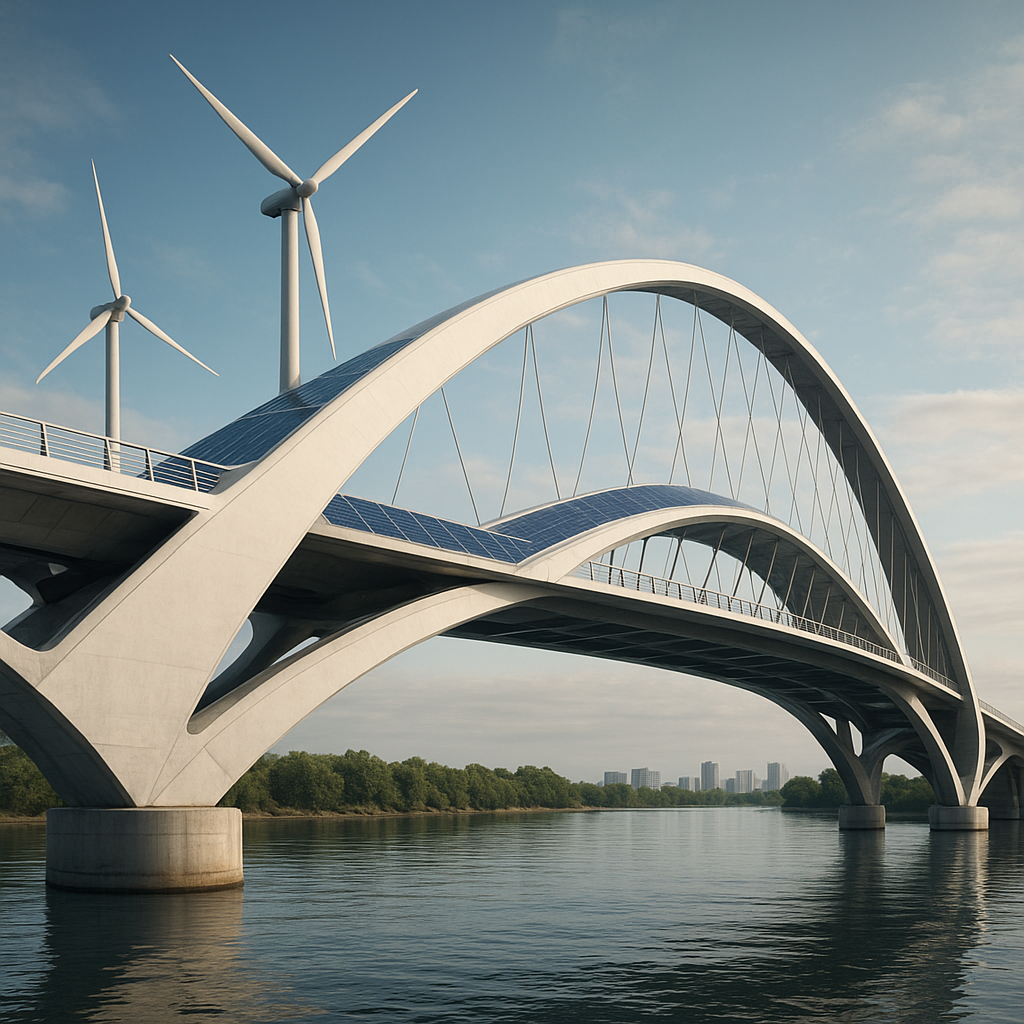
Material innovation is central to these futuristic spans. Embedded within the concrete, specialized conductive fibers channel electrical output with minimal loss. Transparent solar laminates adhere to glass guardrails, converting daylight into clean power without obstructing scenic views. Some designs employ thin-film photovoltaics directly onto steel trusses, creating a ribbon of solar cells that follows the bridge’s elegant contours.
Key breakthroughs include:
- Nanotechnology-infused coatings that enhance photovoltaic efficiency
- Self-healing composite materials reducing maintenance downtime
- Thermoelectric elements capturing temperature differentials between decks and ambient air
Thermoelectric modules integrated along underbelly panels exploit heat variations created by traffic and sunlight. As vehicles generate thermal gradients, electrons move across semiconductor junctions, producing a steady electrical current. This layered approach to innovation leverages both light and heat, maximizing the energy yield without compromising structural integrity.
Integration with Smart Urban Systems
Beyond mere generation, these energy-positive bridges function as nodes within a larger intelligent network. Dedicated control centers monitor output, reroute surpluses to local buildings, and feed critical data into city-wide management platforms. Real-time analytics track pedestrian density and environmental factors, adjusting lighting intensity or activating charging ports for e-bikes and scooters when power flow peaks.
Such connectivity is empowered by:
- IoT sensors that regulate energy distribution based on demand
- Automated grid-integration protocols for seamless power handoff
- Blockchain-secured transaction logs ensuring transparent energy credits
With this level of connectivity, urban planners can forecast usage patterns and anticipate maintenance needs. Smart algorithms predict wear on kinetic surfaces, scheduling cleaning or tile replacement before efficiency declines. Meanwhile, dynamic LED strips powered by the bridge itself create visually stunning displays that respond to environmental cues, reinforcing the structure’s role as both utility and public artwork.
Biomimicry and Aerodynamic Form
Inspired by nature, futuristic bridges often adopt biomimetic shapes to enhance airflow and structural performance. Curved silhouettes mimic wing profiles, facilitating smooth wind currents that spin integrated turbines nestled along the arches. These aerodynamic contours not only reduce drag but also channel gusts to specific energy-harvesting modules, boosting total output.
Embracing principles of biomimicry and aerodynamics, designers achieve:
- Optimized turbine placement within nacelle-like housings
- Flow-redirecting fins that regulate vortex shedding
- Expandable louvers that adjust for seasonal wind variations
Such organic forms blur the line between engineered precision and natural elegance. By harmonizing with environmental forces, these bridges amplify performance while minimizing visual intrusion, embodying both function and artistry in equal measure.
Future Horizons and Modular Expansion
Looking ahead, the modular construction of energy-generating bridges promises rapid deployment in emerging megacities. Prefabricated segments arrive on-site with pre-installed modular energy units, allowing almost plug-and-play assembly. As populations grow, additional spans can be linked, creating networks of interconnected power-producing arteries.
This modularity fosters:
- Scalable infrastructure catering to dynamic urban needs
- Cost-effective upgrades when new harvesting technologies emerge
- Flexible reconfiguration of pedestrian, cycling, and vehicular lanes
By adopting such forward-looking strategies, municipalities worldwide can leapfrog legacy systems and embrace a new generation of connective architecture. Futuristic bridges that generate energy stand as beacons of progress, merging the realms of engineering, design, and ecology into a cohesive whole.