






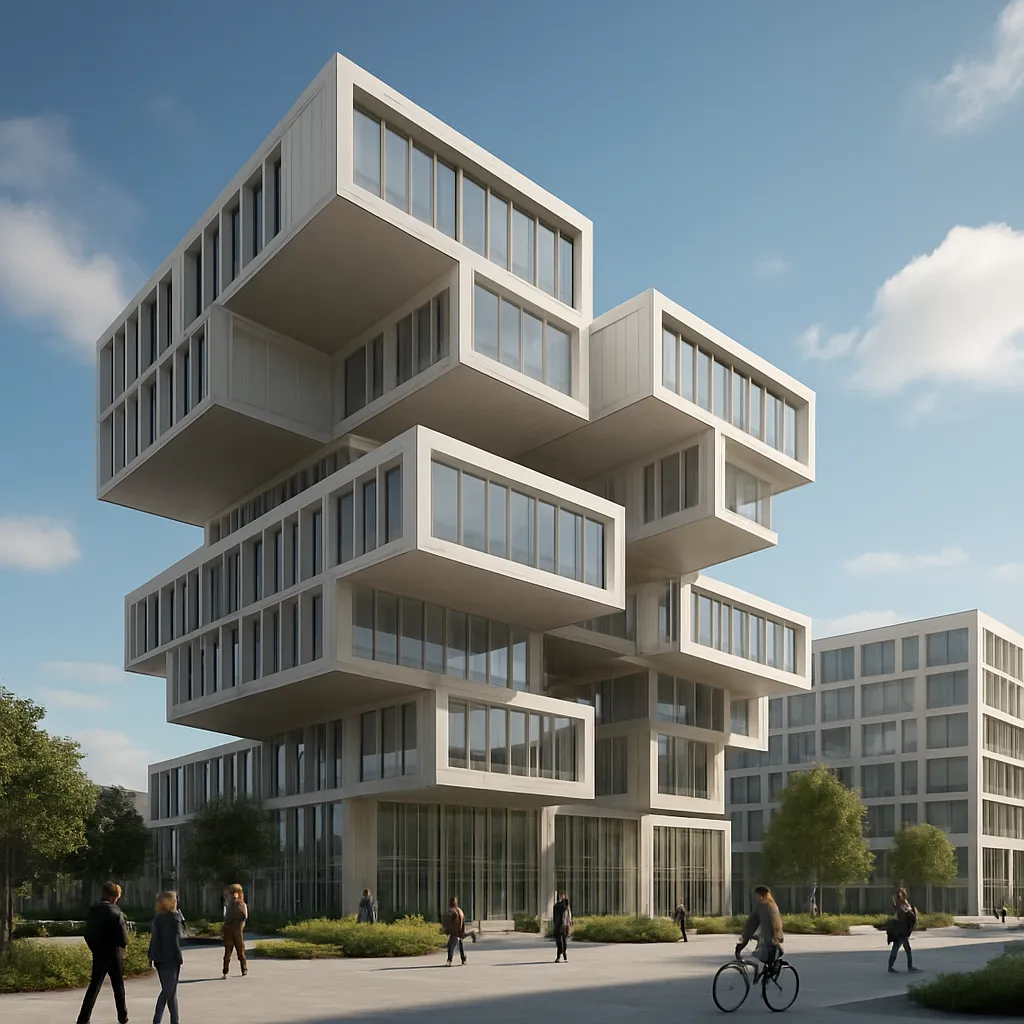
The realm of adaptive architecture transcends static forms, giving rise to buildings that **respond** dynamically to environmental cues and occupant needs. These structures incorporate cutting-edge **sensors**, **smart materials**, and advanced control systems to deliver unparalleled levels of **efficiency** and user comfort. Far from a distant dream, responsive architecture is already influencing urban landscapes and sparking a revolution in how we envision the spaces around us. This article explores the underlying principles, enabling technologies, pioneering implementations, and future directions of buildings that adapt instantly to changing conditions.
Fundamental Principles of Adaptive Design
At its core, responsive architecture relies on a synergy of form and function, where every element contributes to the building’s ability to **adaptation**. Instead of rigid façades, designers embrace modular components that shift, rotate, or expand based on real-time data. This approach fosters greater **mobility** within fixed structures, allowing interior partitions to reconfigure themselves automatically for diverse activities—conferences transform into classrooms, and open-plan offices subdivide into private work pods with minimal human intervention.
Another key principle is achieving optimal **sustainability** by minimizing energy waste. Adaptive elements such as dynamic shading systems or electrochromic glass panels adjust transparency and reflectance throughout the day. By harnessing daylight while reducing thermal gains, these features reduce cooling loads and enhance occupant well-being. This continuous feedback loop between environmental inputs and architectural response epitomizes the notion of a structure as a living entity rather than a static container.
Integration of occupant preferences further refines the adaptive process. Embedded sensors monitor variables like carbon dioxide levels, humidity, and even emotional states inferred from biometric readings. When air quality dips, ventilation louvers actuate to draw in fresh air. If lighting conditions fall below comfort thresholds, luminaires reorient and modulate brightness automatically. The result is an environment that constantly tunes itself, promoting productivity and healthy living conditions through proactive, not reactive, design.
Core Technologies Enabling Instant Adaptation
Emergence of the Internet of Things (IoT) coupled with machine learning algorithms underpins the intelligence of responsive buildings. Arrays of micro-sensors collect vast streams of data on temperature, occupancy, sunlight exposure, and structural stress. These inputs feed into predictive models that forecast changes in microclimates and usage patterns, orchestrating **actuators** to preemptively adjust mechanical systems. This level of **autonomy** reduces reliance on manual controls and fosters seamless interactions between humans and their built environment.
Equally critical are advances in **smart materials** that alter properties in response to electrical, thermal, or mechanical stimuli. Shape-memory alloys embedded in façade elements can twist and fan out when exposed to heat, creating dynamic shading devices. Photochromic layers within windows transition from clear to opaque under UV radiation, eliminating the need for external blinds. Such materials provide a passive yet robust form of responsiveness, reducing energy consumption and maintenance costs.
Robotic construction methods complement these materials by enabling precise fabrication and on-site assembly of complex geometries. 3D printers and robotic arms can manufacture and install modular panels with integrated sensors and wiring in a single operation. This process accelerates construction timelines and enhances the **modularity** of building systems, making future upgrades or reconfigurations straightforward. As robotics refine their spatial awareness and dexterity, they will play an increasingly prominent role in delivering customized, adaptive environments.
Notable Implementations and Prototypes
- Dynamic Skin House: Situated in Barcelona, this experimental residence features a double-skin façade that breathes with temperature fluctuations. The outer membrane inflates or deflates to intercool the interior, achieving 30% energy savings during summer months.
- Shelter 2.0 Pavilion: Designed for a global expo, this pavilion deploys a network of kinetic panels that rotate in unison to form fluid, wave-like movements. Beyond an artistic statement, the system optimizes natural ventilation and daylight harvesting.
- Adaptive Office Tower: A corporate high-rise in Tokyo employs AI-driven HVAC zoning, floor by floor. When conference rooms empty, the system reroutes airflow to occupied sectors, cutting energy consumption by over 40% annually.
- Urban Flood Barrier: In the Netherlands, retractable flood walls rise automatically when sensors detect rising water levels. Powered by hydraulic pistons and connected to municipal monitoring networks, the barrier protects low-lying districts with minimal warning times.
These prototypes demonstrate that instant adaptability is not confined to interior adjustments but spans entire building envelopes and urban infrastructure. By blending mechanical innovation with digital intelligence, designers are forging resilient solutions to pressing climate challenges and shifting social needs.
Emerging Challenges and Future Prospects
Despite remarkable progress, several obstacles must be overcome before adaptive architecture becomes ubiquitous. Data security and privacy concerns rank high, as buildings gather sensitive information on occupant behaviors. Robust encryption protocols and transparent data governance policies are essential to maintain user trust. Additionally, integrating disparate building systems—lighting, HVAC, security—into a unified control platform requires standardized communication protocols that are still evolving.
Another challenge lies in balancing complexity with reliability. Systems laden with countless moving parts demand rigorous testing to ensure fail-safe performance under extreme conditions. Redundancy strategies and self-diagnostic algorithms will play critical roles in guaranteeing uninterrupted operation. Moreover, the upfront costs of smart materials and robotic assembly can be prohibitive, necessitating new financing models and incentives to accelerate adoption.
Looking ahead, convergence of bioinspired design and synthetic biology promises to usher in living façades embedded with algae or microbial cultures that generate biofuels or oxygen. Buildings might one day possess vascular networks for self-healing cracks or self-cleaning surfaces that repel pollutants. As the boundaries between the organic and the engineered blur, future structures will evolve in harmony with the natural ecosystems they inhabit.
In the quest for more responsive, immersive, and sustainable environments, architects, engineers, and urban planners must collaborate across disciplines. Only through collective **innovation** can we realize the full potential of an adaptive built environment—one where every structure reacts intelligently, enhances our well-being, and nurtures the planet.