









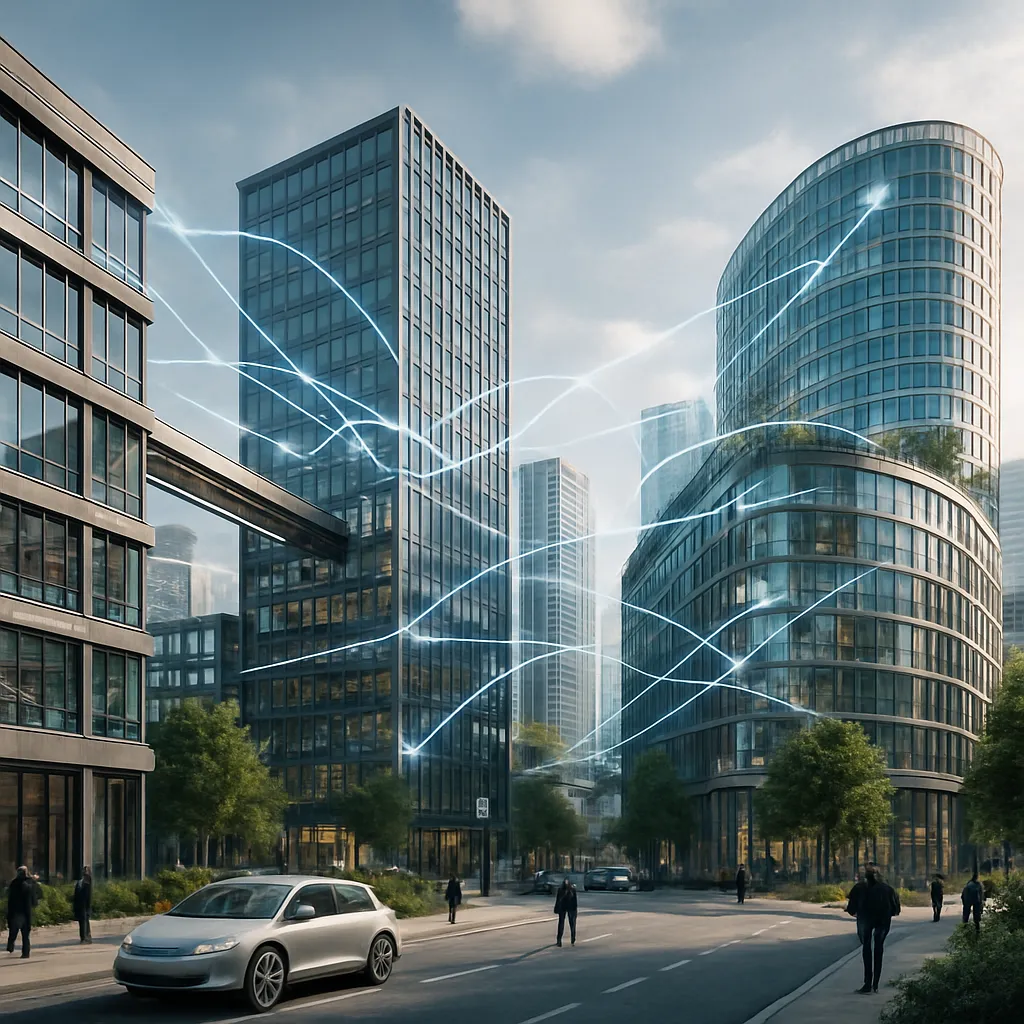
The evolution of urban environments is accelerating at an unprecedented pace, fueled by advances in connectivity, materials science, and artificial intelligence. Hyper-connected buildings represent a new paradigm where every physical element transforms into a data node, enabling spaces that sense, adapt, and optimize in real time. By embedding intelligent networks throughout the built environment, designers and engineers are dismantling traditional boundaries between structure, systems, and occupants. This article explores the core principles driving futuristic architecture, from integrated digital frameworks to responsive materials, and examines how these innovations will reshape our cities.
Connectivity as the Cornerstone
Networked Foundations
At the heart of hyper-connected buildings lies a robust digital spine that links devices, appliances, and structural elements into one cohesive ecosystem. Leveraging both wired and wireless protocols—such as 5G, LPWAN, and mesh networks—these infrastructures ensure seamless communication across thousands of endpoints. Real-time data streams gathered by sensors embedded in walls, floors, and HVAC systems feed into centralized platforms, enabling predictive maintenance and dynamic performance tuning. The true value emerges from interoperability: when lighting, climate controls, security systems, and elevators collaborate under a unified interface, the building becomes an intelligent organism that balances comfort, safety, and resource use.
Edge Intelligence
Rather than offloading all computation to distant cloud servers, hyper-connected buildings employ distributed processing at the edge of the network. AI models run locally on micro data centers or embedded controllers, analyzing environmental patterns and occupant behavior in real time. This AI-driven approach minimizes latency, enhances reliability, and preserves bandwidth. By performing on-site analytics, the system can autonomously adjust lighting levels, optimize airflows, or reroute power during peak demand. The result is a resilient digital ecosystem capable of self-regulation, where networked devices demonstrate autonomy in maintaining ideal conditions and safeguarding operations.
Adaptive Design and Materials
Responsive Facades
Futuristic façades are no longer static barriers but dynamic interfaces between interior and exterior environments. Kinetic panels, electrochromic glass, and shape-shifting composites enable façades to modulate solar gain, glare, and ventilation based on instantaneous weather data. By integrating embedded actuators and control algorithms, these skins can twist, expand, or tint in response to environmental stimuli. The modular nature of these systems affords architects the freedom to craft visually striking forms without sacrificing performance. Through real-time feedback loops, façades achieve optimisation of daylight harvesting and thermal control, reducing energy consumption and enhancing occupant well-being.
Nanomaterials and Self-Healing Structures
The incorporation of advanced nanomaterials marks a revolution in structural engineering. From carbon nanotube–reinforced concrete to shape-memory alloys, these novel substances endow buildings with exceptional strength-to-weight ratios and adaptive capabilities. Microcapsules dispersed within coatings release healing agents when cracks form, promoting resilience by repairing damage before it propagates. Self-cleaning surfaces break down pollutants through photocatalytic reactions, while phase-change materials regulate thermal storage. This fusion of biology-inspired processes and material science elevates durability, extending service life and minimizing maintenance demands.
Data-Driven Sustainability
Energy Harvesting and Management
Smart infrastructure converges on carbon-neutral goals by embedding renewable generation within building envelopes. Photovoltaic glass, wind-responsive turbines, and piezoelectric floor tiles harvest energy from sunlight, wind, and human activity. Integrated microgrid controllers allocate power flows, prioritize on-site consumption, and interact with utility networks to sell excess energy. By leveraging real-time monitoring, these systems boost operational efficiency, flattening demand peaks and lessening dependence on nonrenewable sources. Predictive algorithms forecast consumption patterns and weather shifts, enabling preemptive adjustments to storage and distribution strategies.
Water and Waste Minimisation
Hyper-connected buildings tackle resource scarcity through closed-loop water management. Smart metering and automated valves divert greywater from showers and sinks into treatment modules for reuse in irrigation or toilet flushing. Solid waste is sorted and processed on-site via sensor-equipped bins, which communicate fill levels and material types to centralized sorting units. This real-time orchestration of flows drives significant reductions in municipal burden. By visualizing usage analytics on occupant dashboards, buildings cultivate awareness and encourage sustainable behavior, demonstrating how digital insights translate into tangible environmental gains.
Security and Privacy in Hyper-Connected Spaces
Cyber-Physical Safeguards
With increasing connectivity comes heightened vulnerability. Hyper-connected buildings deploy layered defense mechanisms combining encryption, anomaly detection, and hardware root-of-trust modules. Network segmentation ensures that critical systems—such as fire alarms and power controls—operate on isolated channels, impervious to threats infiltrating guest Wi-Fi or building management interfaces. Continuous vulnerability scanning and automated patching maintain a robust security posture, safeguarding both physical and digital realms.
Ethical Data Governance
As occupants generate a wealth of personal and environmental data, transparency and consent frameworks become imperative. Data lakes are governed by strict policies dictating retention periods, anonymization protocols, and user access rights. Privacy-preserving computation techniques—like federated learning and homomorphic encryption—allow analytical models to refine building performance without exposing sensitive information. By embedding ethical principles into every layer of the architecture, hyper-connected infrastructures earn occupant trust and comply with evolving regulations.